
 (561) 400-2205
It’s a feeling every Floridian dreads: the air conditioning gives out on a hot, sticky night. Your first instinct might be to frantically search for 24 hour air conditioning repair, but hold on for just a moment. A few quick checks could actually get your system running again, saving you the stress and cost of an emergency call.
This is your action plan for those first few critical minutes. Let's walk through the simple stuff before picking up the phone.
Your First Steps When the AC Fails
Panic is understandable when the cool air stops, but a calm, methodical approach is your best friend here. Before you assume a catastrophic failure, take a breath and run through a few basic troubleshooting steps. These don't require any special tools or technical know-how, but they cover the most common culprits I see on late-night service calls.
Check the Thermostat First
It sounds almost too simple, doesn't it? But you would be absolutely shocked how many emergency calls are traced back to a simple thermostat issue. A dead battery or a bumped setting can easily trick you into thinking the whole system has crashed.
- Look at the Settings: First, make sure the thermostat is actually set to "Cool". Then, check that the set temperature is at least a few degrees lower than what the room feels like.
- Check for Power: If you have a digital thermostat with a blank screen, it likely needs new batteries. Pop the cover off and swap them out. This is a five-minute fix that solves the problem more often than you'd think.
- Try a Quick Reboot: Turn the entire system to the "Off" position at the thermostat. Wait a full 60 seconds—don't rush it—and then switch it back to "Cool." This little trick can often reset minor electronic glitches.
Spending a few minutes here could easily save you an after-hours service fee.
Key Takeaway: Always start with the simplest fix. A quick thermostat check is the fastest way to rule out the most common and easily solved AC problem.
Inspect Your Circuit Breaker
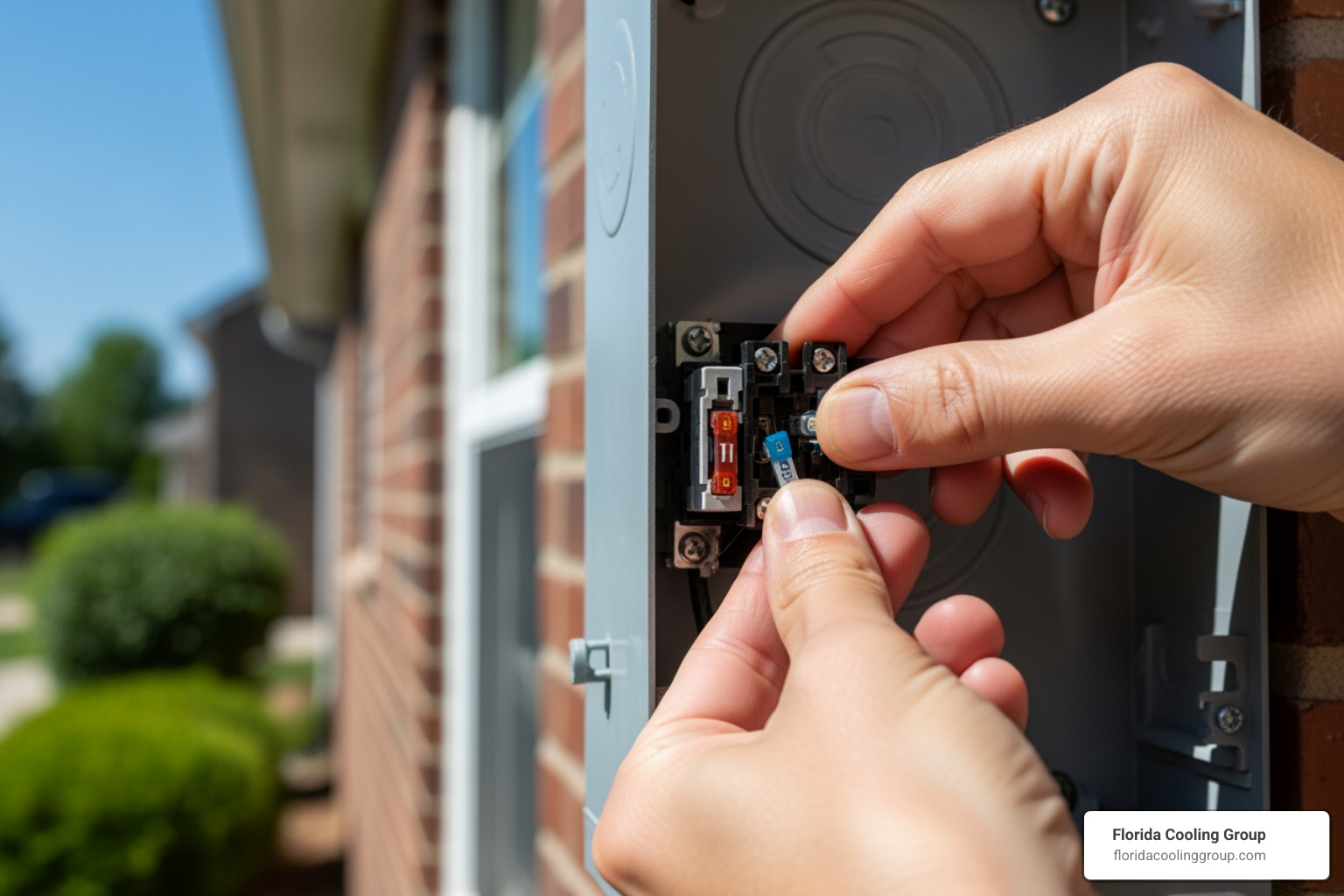
Your air conditioner is a beast of an appliance, and it draws a lot of power. To protect your home's electrical system, it has its own dedicated circuit breaker. A brief power surge or system overload can cause this breaker to trip, cutting power to the AC as a safety precaution.
Find your home's main electrical panel and open the door. You’re looking for a breaker labeled "AC," "HVAC," or something similar. If that switch is flipped to the "Off" position or is stuck in the middle, you’ve likely found your problem.
To fix it, you have to push the switch firmly all the way to "Off" first, then flip it back to "On." If it trips again right away, stop. Do not try to reset it a second time. An immediately tripping breaker signals a more serious electrical problem that needs a professional technician.
Examine the Air Filter
A dirty, clogged air filter is the arch-nemesis of a healthy AC system. I've seen filters so packed with dust and pet hair that they completely block airflow. This makes your system work way too hard, which can cause the indoor evaporator coils to literally freeze into a block of ice, stopping all cooling in its tracks.
Find the filter slot on your indoor air handler unit and slide the filter out. If it looks like a fuzzy gray blanket, it’s long overdue for a change. Replace it with a fresh one.
Even if a new filter doesn't magically bring your AC back to life right away (especially if the coils are already frozen), it’s a necessary first step for getting the system running efficiently again. The urgency of an AC breakdown is a lot like other home emergencies where you need help fast; for a deeper look into how companies ensure they can be found in these critical moments, it’s worth understanding emergency service availability. Completing these checks gives you the power to know whether you have a simple fix or a real emergency on your hands.
Common AC Problems You Can Safely Troubleshoot
So, you've already checked the thermostat and the circuit breaker, but the AC still isn't cooperating. What's next? Before you jump to call for 24-hour air conditioning repair, let's dig a little deeper. Some of the most common AC breakdowns feel like a disaster, but they're often caused by surprisingly simple issues you can safely handle yourself.
Knowing what to look for can save you a lot of time, money, and sweat. This image lays out what typically happens during an emergency service call, from the moment your system dies to when a pro arrives.
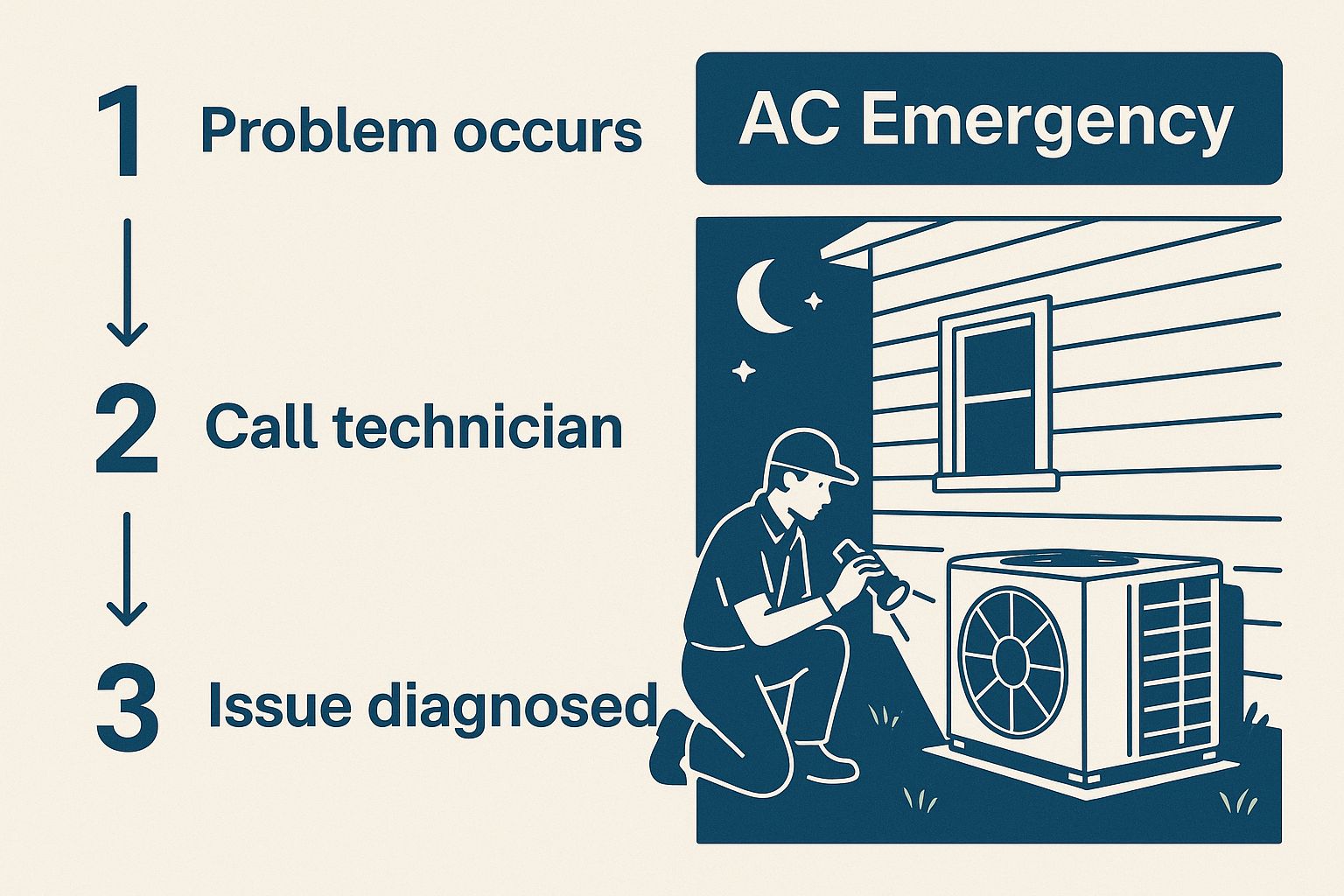
As you can see, the more information you can gather upfront, the better. Let's walk through a few things you can check right now.
The System Is Running But Blowing Warm Air
This is a classic—and incredibly frustrating—Florida problem. You can hear the air conditioner humming away, but the air drifting out of your vents is lukewarm at best. It’s easy to assume the worst, like a busted compressor, but the real culprit is often hiding outside.
Take a look at your outdoor condenser unit. Its entire job is to dump all the heat it has pulled from your home into the outside air. If it can't breathe, your house can't get cool.
- Look for Clogged Fins: The metal fins surrounding the unit can get caked with dirt, grass clippings, and leaves. This layer of grime acts like a winter coat, trapping heat and preventing the system from cooling effectively.
- Give It Some Space: Your unit needs room to work. Make sure there’s at least two feet of clear space all the way around it. Overgrown bushes, lawn equipment, or a nearby fence can easily choke off its airflow.
If you find the unit is just dirty, you can often clean it yourself. The key is to shut off the power at the circuit breaker first. Safety first, always. Then, use a regular garden hose on a gentle setting to spray the fins from the top down, washing the debris away. Whatever you do, don't use a pressure washer—it will bend the delicate fins and create a much bigger problem.
For more detailed steps on this and other issues, our comprehensive air conditioning troubleshooting guide is a great resource.
Water Leaking Around The Indoor Unit
Finding a puddle of water around your indoor air handler can be alarming, but it doesn't automatically mean you have a massive, expensive repair on your hands. More often than not, the cause is a simple clog in the condensate drain line.
As your AC cools, it pulls humidity from the air, which turns into water. This condensation is supposed to drain away safely through a small PVC pipe. Over time, that pipe can get clogged with algae and sludge. When that happens, the water has nowhere to go but back up and out of the drain pan, right onto your floor.
Expert Tip: A little condensation or "sweat" on the refrigerant lines is perfectly normal on a hot day. A puddle of water on the floor, however, is a clear signal that your drain line is blocked and needs immediate attention to prevent water damage.
Your AC Is Constantly Turning On And Off
Does your AC run for a few minutes, shut off, then kick right back on again? That’s called short cycling. It’s terrible for your energy bills and puts a ton of wear and tear on your system's most expensive component: the compressor.
While serious issues like a refrigerant leak can cause this, a much more common culprit is something we've already talked about—a filthy air filter. A clogged filter suffocates your system, causing pressure to build up and internal temperatures to get too high. When this happens, a safety switch trips and shuts the unit down. A few minutes later, it tries again, and the cycle repeats.
DIY Troubleshooting Checklist For Emergency AC Issues
Before you pick up the phone, run through this quick checklist. It covers the most common culprits we see in the field that homeowners can often resolve on their own.
| Symptom | Potential Simple Cause | What You Can Do Safely |
|---|---|---|
| AC won't turn on | Tripped breaker or thermostat issue | Reset the breaker once; check thermostat batteries and settings. |
| System blowing warm air | Dirty outdoor condenser coils | Turn off the power and gently rinse the coils with a hose. |
| Water leaking indoors | Clogged condensate drain line | Look for a blockage at the exterior drain pipe opening. |
| Unit short cycling | Severely clogged air filter | Replace the air filter with a fresh, clean one. |
Walking through these steps systematically can often solve the problem. Even if it doesn’t, you’ll have gathered valuable information that will help your technician diagnose and fix the issue much faster once they arrive.
When It’s Time to Call a Pro for Emergency AC Repair

While you can handle many common AC hiccups yourself, some symptoms are clear red flags that need a professional—and fast. These aren't just minor annoyances; they're often signs of serious, potentially dangerous problems that could put your safety at risk or lead to catastrophic damage.
Honestly, knowing when to put down the tools and pick up the phone is one of the most important skills a homeowner can have. Ignoring these warning signs can quickly turn a straightforward repair into a full-blown system replacement. The key is to act fast when you spot a serious issue, and that’s when a call for 24 hour air conditioning repair is your only move.
Alarming Sounds You Should Never Ignore
You get used to the normal hums and clicks of your AC unit. But when it starts making new, loud, or unusual noises, it’s basically screaming for help. These aren’t the kinds of sounds you can fix by tightening a loose screw; they almost always point to a severe mechanical failure.
Keep an ear out for these specific danger sounds:
- Loud Grinding or Metal-on-Metal: This is a bad one. It usually means the motor bearings are shot or the compressor is failing. If you keep running it, the compressor—the heart of your AC—can seize up completely.
- High-Pitched Squealing or Screeching: A piercing shriek often points to dangerously high internal pressure. It could also signal a failing blower motor. Either way, it’s a serious hazard.
- Persistent Banging or Clunking: If you hear something banging around inside the unit, a part has likely come loose. A rogue part flying around can destroy other critical components in a matter of minutes.
If you hear any of these, shut the system off at the breaker immediately. Don't wait. Letting it "work itself out" is a surefire way to get a much bigger repair bill.
Dangerous Smells and Visible Leaks
Your own senses are surprisingly good diagnostic tools. Sometimes what you see or smell can tell you more about your AC’s health than anything else.
A burning smell is the most urgent red flag you can get. It might be an overheating motor, but more often, it points to an electrical problem like fried wiring. An electrical fire inside your HVAC system is a very real, very serious possibility.
The other big one is a hissing sound, especially if the air isn't blowing cold. This almost always means you have a refrigerant leak. Refrigerant is a chemical you don't want to be breathing, and the leak itself means your system has lost its ability to cool.
Safety First: A hissing noise or a sweet, almost chemical-like odor means you likely have a refrigerant leak. Don't go looking for the source yourself. Shut down the system and call for emergency service immediately, as refrigerant exposure can be hazardous.
With today’s extreme weather, our AC systems are under more strain than ever. For example, a recent survey in Houston found that 41% of residents run their air conditioners for an average of over 17 hours per day during the hottest months. That kind of intense use accelerates wear and tear, making after-hours breakdowns much more common.
When the Stakes Are Too High for DIY
Beyond specific sights and sounds, some situations are just automatic emergencies. If your AC dies during a brutal Florida heatwave, waiting isn't an option—especially if you have young kids, elderly family members, or anyone with a medical condition at home. Extreme heat can turn into a serious health crisis in no time.
When looking for the right technician, having a basic understanding of the Plumbing HVAC industry can help you choose a reputable company. A trained professional, like the ones at Florida Cooling Group, has the diagnostic tools and expertise to handle these complex issues safely, getting your home back to being the cool, comfortable oasis it should be.
How to Prepare for the Technician’s Arrival
You’ve made the call for 24 hour air conditioning repair, and help is on the way. That’s a huge relief, but your job isn’t quite done yet. A few simple preparations can make a world of difference in how quickly and efficiently the technician can get you back up and running.
Think of it this way: the faster they can get to work, the faster your home gets cool again. Taking just 10-15 minutes to get things ready can save a surprising amount of time on a service call, especially during a late-night emergency.
Clear a Path for Quick Access
Your HVAC technician needs to get to two key areas: your indoor air handler and your outdoor condenser unit. Making these spots easy to reach is probably the most helpful thing you can do.
Imagine a tech showing up at 2 AM, lugging a heavy tool bag and diagnostic equipment. They'll be incredibly grateful if they don’t have to navigate an obstacle course of laundry baskets, storage boxes, or kids' toys just to reach your indoor unit.
- Indoor Unit: This is often tucked away in a closet, attic, or garage. Take a minute to move any items blocking the access panel. If you can, make sure the area is well-lit—a nearby lamp or just a clear space for them to place a work light helps immensely.
- Outdoor Unit: Head outside and clear away any overgrown shrubs, fallen branches, or lawn equipment from around the condenser. A technician needs at least two feet of clear space on all sides to work safely and effectively.
A clear path isn't just about speed; it's a huge safety plus for both the technician and your home.
Gather Your System’s Information
When the technician arrives, one of the first things they'll need to know is what kind of system they’re working on. Having this info ready can streamline the diagnostic process right from the jump.
See if you can find the make and model number of your AC unit. It’s usually on a sticker or a small metal plate on the side of both the indoor and outdoor units. Don't stress if you can't find it, but it's a great head start if you can.
Pro Tip: I always recommend keeping a simple file with your HVAC system’s manual, warranty info, and a log of past repairs. This history provides valuable clues that can lead to a much faster diagnosis during an emergency.
Also, think back on what exactly went wrong. Jotting down a few notes can be incredibly useful. Did you hear a strange noise? Notice a weird smell? When did you first realize it wasn't cooling? These details act as a roadmap for the technician, pointing them in the right direction.
Create a Safe Work Environment
A few final touches can ensure the repair goes smoothly and safely for everyone. Your technician is a guest in your home, and creating a considerate environment is always appreciated.
First, if you have pets, please secure them in another room before the tech arrives. Even the friendliest dog or most curious cat can get underfoot or slip outside while doors are open. This keeps your furry family members safe and lets the technician focus entirely on the repair.
Second, if the repair is happening late at night, be mindful of noise. Just let the technician know about any sleeping family members so they can work as quietly as possible. These small courtesies make the whole experience less stressful.
Finally, getting ready for the technician's visit is a great proactive step that goes hand-in-hand with good maintenance. For a deeper dive into keeping your system in top shape, check out our guide on the ultimate HVAC preventive maintenance checklist for 2025. By taking these simple steps, you're not just waiting for a fix—you're helping to make it happen faster.
What to Expect During an Emergency Service Call
Having an HVAC technician show up in the middle of the night can be stressful, but knowing what a professional service call actually looks like can take a lot of that anxiety away. A 24 hour air conditioning repair visit isn't just about a quick fix; it’s about a technician who communicates clearly, diagnoses the problem accurately, and gives you transparent solutions.
When our tech from Florida Cooling Group arrives, their first step isn't to just start pulling things apart. They'll want to hear the story from you. What did you notice? Any strange sounds or smells? When did it all start? This initial conversation is a huge piece of the puzzle and helps them zero in on the problem faster.
The Professional Diagnostic Process
After getting the details from you, the technician will dive into a systematic inspection of your AC system. This isn't guesswork. It's a methodical process designed to find the root cause of the failure, ensuring the right repair is done the first time.
They'll likely start by double-checking the basics—the thermostat settings and circuit breakers—just to be absolutely sure the simple stuff is covered. From there, they get into the more technical side of things.
- Checking Electrical Components: Using a multimeter, they’ll test key electrical parts like the capacitor, contactor, and various relays. A bad capacitor is one of the most common culprits for an AC breakdown in Florida, and thankfully, it’s often a quick fix.
- Inspecting the Refrigerant System: The technician will hook up gauges to your system to read the refrigerant pressures. These numbers tell a detailed story about the health of your compressor and can immediately point to a potential refrigerant leak.
- Examining Mechanical Parts: They’ll also be listening for any unusual noises from the motors and looking over the fan blades for damage. A failing fan motor, whether it’s inside or outside, can bring the entire system to a grinding halt.
A Pro Will Keep You in the Loop: A true professional won't leave you in the dark. They should walk you through their findings and explain the issue in plain English—no confusing jargon. You should feel like you have a solid understanding of what's wrong with your system.
Clear Communication and Upfront Pricing
Once the technician has pinpointed the problem, the next step is the most important one: talking to you about it. They should clearly explain what part has failed and why it happened. Crucially, they’ll give you a clear, upfront quote for the repair before they pick up a single tool.
This is your moment to ask questions. You should never feel pressured into a snap decision. A reputable company will provide a detailed quote that breaks down the costs for both parts and labor. Transparency is especially important on an after-hours call, as 24 hour air conditioning repair services do have a different price structure. This usually includes a diagnostic fee and a higher labor rate to cover the technician’s time.
The need for these round-the-clock services is growing fast. In fact, annual spending on HVAC repair and maintenance is projected to climb past USD 10 billion worldwide. This is largely driven by rising temperatures and the sheer number of AC units that need immediate help outside of a 9-to-5 schedule. You can see how critical these services have become by exploring more HVAC industry trends.
Common On-the-Spot Repairs
Here's the good news: many common AC issues can be fixed right then and there. Our technicians carry a wide range of common, universal parts on their trucks specifically for these late-night emergencies.
Some of the most frequent problems we can solve in a single visit include:
- Capacitor Replacement: This little part gives the motors the jolt they need to start. When it goes, the system is dead in the water. Swapping it out is usually a quick, 15-minute job.
- Fan Motor Repair or Replacement: If the big fan on your outdoor unit stops spinning, your AC can't shed heat and will quickly overheat. Technicians often have the most common motor sizes ready to go.
- Contactor Replacement: Think of this as the heavy-duty switch that sends power to your outdoor unit. If it gets stuck or burns out, the system won't turn on.
- Clearing a Clogged Drain Line: A surprisingly common cause of water leaking inside your home. It’s a simple fix that can prevent a lot of damage.
If the problem is more serious, like a major refrigerant leak or a failed compressor, the technician might perform a temporary fix to get you through the night comfortably. They will then schedule a follow-up visit during regular business hours to complete the permanent repair, especially if a specific part needs to be ordered. This two-step approach gets your cool air back on immediately while ensuring a proper, long-term solution.
Common Questions About 24-Hour AC Repair
An AC emergency after hours can be seriously overwhelming. When your house is heating up in the middle of a Florida night, your mind is probably racing with questions. You need straight answers, not a bunch of technical jargon.
Let's cut through the confusion and address the real questions we hear from homeowners who need 24-hour air conditioning repair. Getting a handle on these answers now can help you make a clear-headed decision when the pressure is on.
How Much More Does Emergency Service Cost?
This is usually the first thing people ask, and for good reason. Let's be upfront: yes, an emergency, after-hours service call will cost more than a standard daytime appointment. You're paying for a skilled technician to be available and ready to roll, often leaving their own family to come help yours.
Most companies handle their emergency pricing in a few common ways:
- Higher Diagnostic Fee: The initial charge to come out and figure out what’s wrong is almost always higher. This covers the immediate dispatch and travel at an inconvenient hour.
- Increased Labor Rate: The hourly rate for the actual repair work is typically higher for nights, weekends, and holidays.
- No Waived Fees: During a normal service call, some companies might waive the diagnostic fee if you go ahead with the recommended repair. That's a lot less likely to happen on an emergency call.
The most important thing you can do is ask about the pricing structure when you call. A reputable company will be transparent about their after-hours rates. To get a better feel for how these things are priced, you can read more about general air conditioning repair costs and what factors play into them.
Can All AC Problems Be Fixed in One Night?
Our goal is always to fix it on the first trip, but the honest answer is, "not always." Technicians keep their trucks stocked with the most common parts that fail, but they can't carry everything for every model ever made.
Repairs We Can Usually Handle in One Visit:
- Capacitor Replacement: This is one of the most frequent failures, and it's usually a quick fix.
- Contactor Issues: The contactor is the switch that sends power to your outdoor unit, another common part we carry.
- Drain Line Clogs: We have the tools on hand to clear a blockage and get the water flowing again.
- Fan Motor Replacements: We carry many of the universal fan motors that fit a wide range of units.
However, more complex or brand-specific problems might require a part we have to get from a supply house. This could be a major refrigerant leak in an evaporator coil or a failed compressor—the heart of your AC system.
What to Expect: If a specific part is needed, a good technician won't just leave you to suffer. They'll often try to find a temporary solution to get some cool air moving. Then, they’ll schedule a follow-up during regular business hours to install the permanent part, saving you from paying emergency labor rates for a second time.
Should I Repair or Replace My Old AC Unit?
This is the big one, especially when you're staring down a hefty repair bill on an older system. It's a tough call to make under stress, but a few key factors can point you in the right direction.
A useful guideline we often share with homeowners is the "$5,000 Rule." Just multiply the age of your AC unit by the estimated repair cost. If that number is more than $5,000, it’s a strong sign that replacement is the smarter financial move. For example, a 10-year-old unit with a $600 repair quote hits $6,000, meaning you should seriously think about a new system.
Here’s what to weigh in your decision:
- System Age: In Florida, the average AC system works hard and lasts about 10-15 years. If your unit is in that window, a major repair might just be the first of many to come.
- Repair Frequency: Is this a one-time thing, or do you have an HVAC company on speed dial every summer? Constant breakdowns are a clear sign your system is on its last legs.
- Energy Efficiency: Today's high-efficiency units can make a huge dent in your monthly FPL bill. Those long-term savings can go a long way toward offsetting the upfront cost of a new installation.
A trustworthy technician will lay out both the repair and replacement options for you, giving you the facts without any high-pressure sales tactics.

Charlie Hadida is a senior HVAC technician and the SEO lead at Florida Cooling Group, with years of real-world experience diagnosing, repairing, and installing residential and commercial HVAC systems throughout Palm Beach and Broward County.
Unlike generic marketing content, Charlie’s work is grounded in on-site service experience — from troubleshooting electrical and airflow issues to overseeing full system replacements, crane lifts, and code-compliant installations. His technical background allows him to translate complex HVAC concepts into clear, accurate, and helpful information for homeowners, property managers, and business owners.
In addition to working in the field, Charlie leads Florida Cooling Group’s SEO and content strategy, ensuring that all service pages, guides, and educational resources reflect real conditions technicians encounter every day. This includes topics such as AC repair, preventive maintenance, system replacements, energy efficiency, permitting requirements, and South Florida–specific climate challenges.
Charlie plays an active role in shaping Florida Cooling Group’s service standards, maintenance programs, and long-term customer education efforts. His combined technical and SEO expertise helps bridge the gap between what customers search for online and what actually matters when servicing HVAC systems in Florida’s demanding environment.
Licensed HVAC Technician (Florida)
Residential & commercial HVAC experience
Hands-on system diagnostics, repairs, and installations
Experience with rooftop units, split systems, and package units
Local experience serving Palm Beach & Broward County
Areas of Expertise:
AC Repair & Troubleshooting
Preventive Maintenance & Service Agreements
HVAC System Replacements & Change-Outs
Commercial HVAC Systems
South Florida HVAC Codes & Permitting