
 (561) 400-2205
You've probably heard the old rule of thumb to replace your HVAC filter every 90 days. Honestly, that's just a generic starting point. Your home, your lifestyle, and even your local environment play a huge role in how often that filter really needs to be changed.
A family with a golden retriever and a couple of cats is going to clog up a filter way faster than a single person living in a pet-free apartment. It’s all about creating a schedule that works for your specific situation.
Your Air Filter Replacement Schedule At a Glance
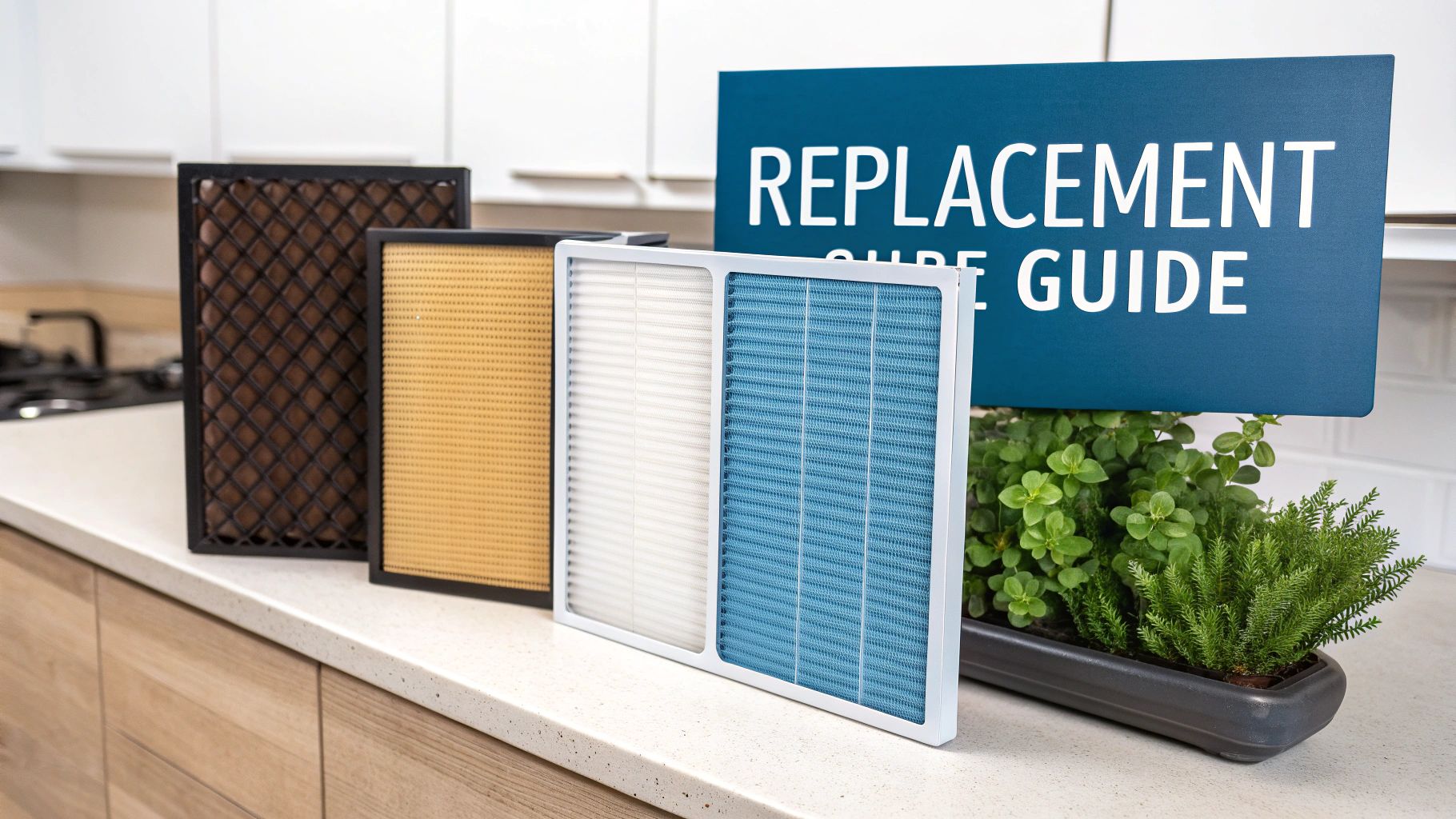
The biggest piece of the puzzle is the type of filter you're using. Those cheap, thin fiberglass filters might seem like a bargain, but they need to be swapped out monthly. On the other hand, a thicker, high-efficiency pleated filter can easily last for several months.
If you struggle to remember home maintenance tasks, it can be helpful to set a specific future date. You can even use a simple online tool to calculate time until a specific event to put the next filter change on your calendar right away.
Air Filter Replacement Frequency at a Glance
To give you a better idea, I've put together this quick reference chart. Think of it as your starting point for figuring out the right rhythm for your home. Find your filter type and household situation to get a solid baseline.
| Filter Type / MERV Rating | Household without Pets | Household with Pets | Allergies or Asthma Sufferers |
|---|---|---|---|
| Fiberglass (MERV 1-4) | Every 30 days | Every 20-30 days | Not Recommended |
| Pleated (MERV 5-8) | Every 60-90 days | Every 45-60 days | Every 45 days |
| High-Efficiency (MERV 9-12) | Every 3-6 months | Every 2-3 months | Every 2 months |
| HEPA (MERV 17-20) | Every 6-12 months | Every 4-6 months | Every 3-6 months |
After you've found your baseline in the table, the real test is a simple visual check. Nothing beats just looking at it.
Pro Tip: Set a reminder to pull out your filter once a month and hold it up to a light. If you can’t see the light through it, it’s done—no matter what the calendar says. A clogged filter makes your system work harder, costs you money, and tanks your air quality.
Remember, changing your filter is one of the easiest and most important things you can do for your system. It's a cornerstone of good upkeep, and our HVAC preventive maintenance checklist can walk you through other simple tasks to keep everything running smoothly.
The Hidden Costs of a Dirty Air Filter
It's tempting to think of a dirty air filter as a problem for another day, but putting off this simple task has real consequences for your budget and your health. Imagine your HVAC system trying to breathe through a thick, dusty blanket. That’s exactly what’s happening when your filter is clogged.
This constant struggle puts a massive strain on the system's most important parts, like the fan motor and compressor. That extra work causes them to wear out faster. Suddenly, a quick and cheap filter swap can turn into an expensive and totally avoidable repair call.
How a Clogged Filter Hits Your Wallet
One of the first places you’ll notice the impact of a dirty filter is on your monthly energy bill. With airflow blocked, your system has to run longer and harder just to keep your home at the temperature you’ve set on the thermostat.
In fact, the U.S. Department of Energy estimates that a dirty filter can drive up your system’s energy use by a staggering 15%. That's a lot of wasted cash over the course of a year, all because of a part that costs just a few bucks.
Ignoring your air filter is like driving your car with the parking brake on. You’ll get there, but you're wasting a ton of fuel and causing unnecessary damage.
It’s Not Just About Money—It’s About Your Health
Beyond the financial hit, a dirty filter takes a direct toll on the air you and your family breathe. Your filter is the first line of defense, designed to trap dust, pollen, pet dander, and other nasty particles floating around your home.
Once it’s full, it can’t trap anything else. Even worse, the system can start pushing those trapped pollutants right back into your living space. This can make allergies and asthma flare up and just generally reduce your comfort. A fresh filter is fundamental to good indoor air quality improvement, helping keep your home the healthy retreat it should be.
To take it a step further, think about reducing other irritants at the source. Using things like hypoallergenic cleaning products can make a huge difference, too.
Figuring Out Your Filter Replacement Timeline
You've probably heard the old "change your filter every 90 days" rule. Honestly, that’s just a starting point. It’s a bit like a "one-size-fits-all" t-shirt—it technically works, but it rarely fits just right. To nail down a schedule that actually works for your home, you need to look at what's happening both inside and outside your four walls.
This decision tree gives you a great visual of what happens when you let a filter get too dirty. It's not just about dust; a clogged filter can hit your wallet, your health, and even damage your HVAC system.
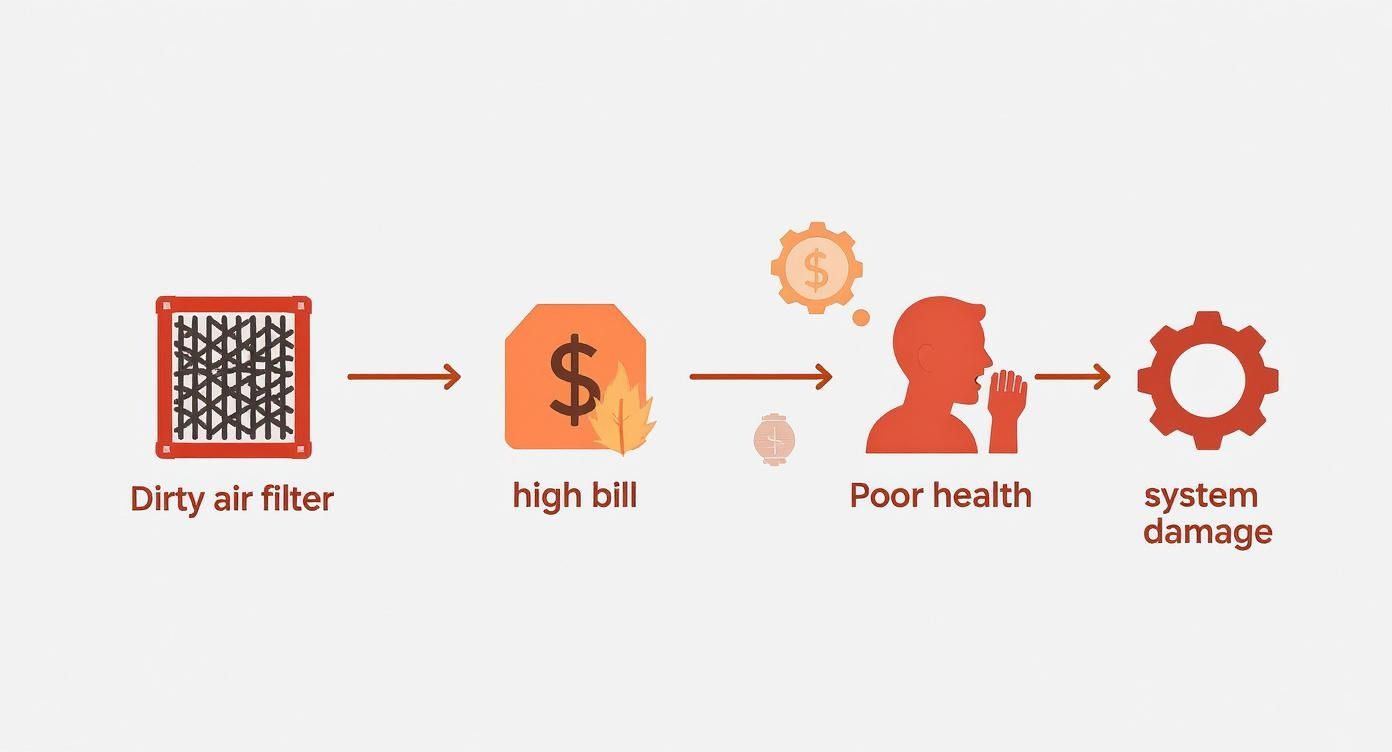
As you can see, a dirty filter kicks off a chain reaction. The effects really do ripple through your home, impacting everything from your monthly bills to your family's comfort.
Look at Your Household's Activity
The biggest factor influencing how fast your filter gets dirty is who—and what—lives in your house. More bodies, whether they're people or pets, means more dust, dander, and hair getting sucked into your system.
Here's a quick breakdown:
- Got Pets? A single dog or cat can easily slash a filter's effective lifespan in half. If you have a few furry friends running around, you should be checking your filter every 30 to 45 days, no matter what the package says.
- Big Family? A bustling household with kids and constant activity naturally kicks up more dust than a quiet home with one or two people.
- Allergies or Asthma? If anyone in your home deals with respiratory issues, clean air isn't a luxury—it's essential. For you, changing the filter more often is a non-negotiable part of keeping everyone healthy.
A handy rule of thumb I've picked up over the years: start with the filter's recommended lifespan and cut it down by about 30% for each pet you have. It sounds like a lot, but you'll notice the difference in your air quality.
Don't Forget Your Home's Environment
Where you live and the condition of your house matter just as much. A brand-new, tightly sealed home in a sleepy suburb is a completely different ballgame than an older, draftier house right next to a busy street.
Think about these outside factors:
- Nearby Construction: Living next to a construction site means you're under constant assault from fine dust. While the work is active, you should be peeking at your filter every couple of weeks.
- Pollen and Pollution: If you're in a city with heavy smog or a rural area with sky-high pollen counts, your filter is working double-time to trap those particles before they get inside.
- Age of Your Home: Older homes often have more leaks and drafts, which is just an open invitation for more dust and outdoor pollutants to sneak in.
This same logic applies beyond your home. Think about your car's cabin air filter. The manual gives a mileage-based suggestion, but if you're constantly stuck in city traffic or driving on dusty roads, that filter will clog up way faster. As auto experts point out, real-world driving conditions affect vehicle filter changes on KwikKarWhitesettlement.com more than just the odometer reading.
By taking a moment to consider these personal factors, you can move past the generic advice and create a filter replacement schedule that truly protects your HVAC system and, more importantly, your family’s health.
Choosing the Right Air Filter for Your Home
https://www.youtube.com/embed/xTJpx4GGz_I
Knowing when to change your air filter is one thing, but picking the right one is a whole different ballgame. You walk into the store, and suddenly you're faced with a wall of options, from flimsy-looking fiberglass things to serious, high-tech pleated filters. What you choose doesn't just affect your air quality; it also determines how often you'll have to do this all over again.
Let's start with the basics. The most common filters you'll see are disposable fiberglass and pleated filters. Fiberglass filters are dirt cheap, but you get what you pay for. They only catch the biggest dust bunnies and need to be replaced every 30 days. They do very little to actually clean your air.
Understanding MERV Ratings
For most people, pleated filters are the way to go. They offer a fantastic middle ground between effective filtration and a reasonable price. You'll see their performance measured by a MERV rating, which stands for Minimum Efficiency Reporting Value.
This rating system, which typically goes from 1 to 20, tells you how good the filter is at trapping tiny airborne particles. The higher the MERV, the smaller the particles it can catch.
- MERV 1-4: These will stop big stuff like pollen and dust mites. Basic, but better than nothing.
- MERV 5-8: Now we're talking. These grab smaller things like pet dander and mold spores. This is the sweet spot for most homes.
- MERV 9-12: If you have pets or someone in the house struggles with allergies or asthma, this is a great choice. They trap much smaller irritants.
It’s easy to think, "I'll just get the highest MERV rating and be done with it." But hold on—that can backfire. A super-high MERV filter can be so dense that it actually restricts airflow, making your HVAC system work overtime. This can drive up your energy bills and even damage the unit. Before you buy, always check your system's manual for the maximum recommended MERV rating.
This idea of matching the product to the system isn't unique to homes. Think about the automotive world. The North American market for automotive air filters was worth about USD 1.5 billion in 2023, largely because modern engines need specific, high-performance filters to meet emission standards. You can read more about automotive filter market trends at GMI Insights.
Just like you wouldn't jam a massive truck filter into a small sedan, you need to find that perfect balance for your HVAC. It's all about finding the right fit that keeps your system running efficiently while protecting your family's health. If you're still a bit lost on what works for your specific vents, our guide on filters for air vents in home can help clear things up.
A Simple Guide to Checking and Changing Your Filter
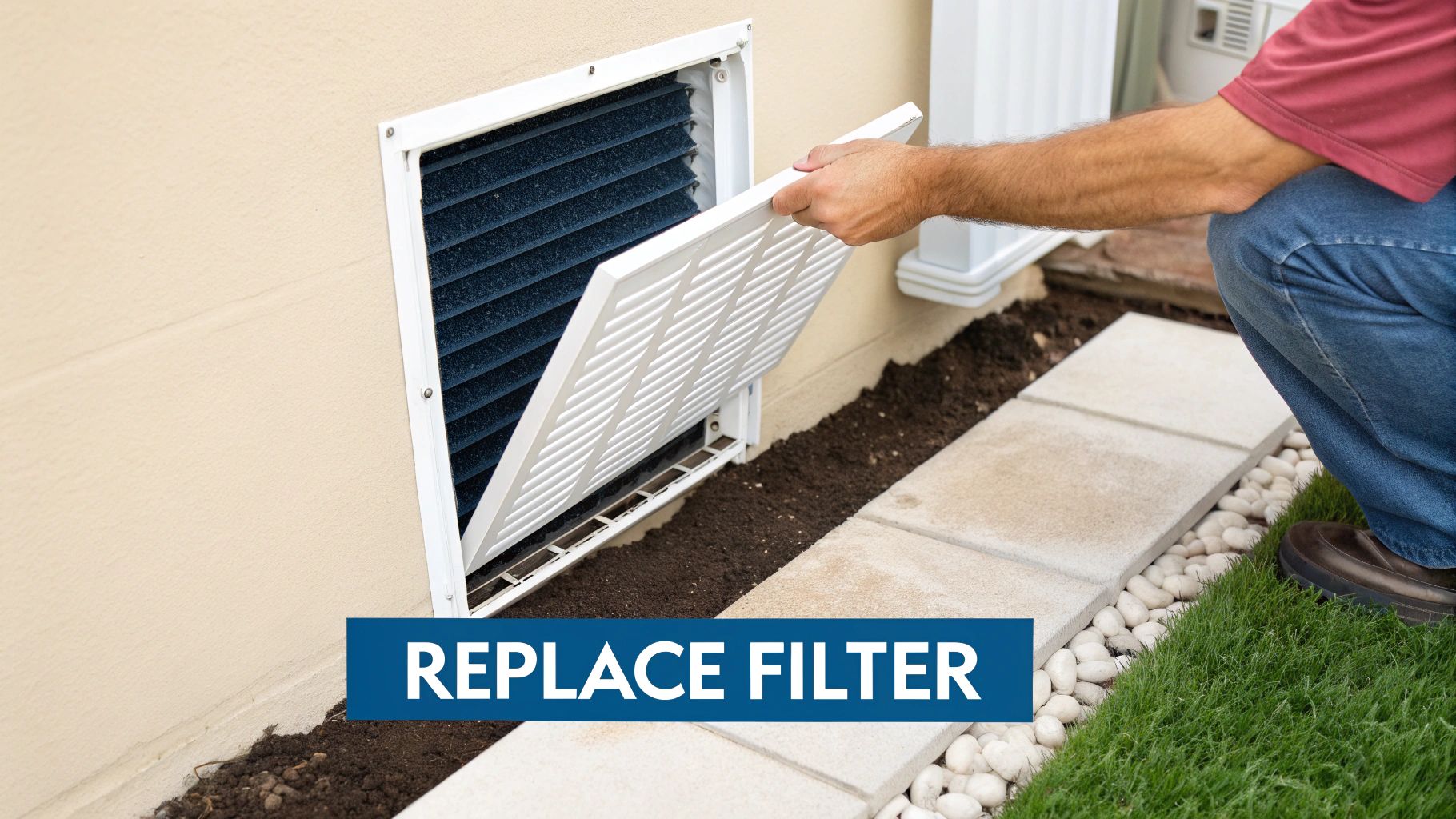
The good news is, you don't need any special tools or an HVAC license to swap out your air filter. It’s one of the easiest home maintenance tasks you can do, usually taking less than five minutes, and it makes a world of difference for your system's performance.
First things first, you need to find the filter. Look for a slot in the return air duct or right inside the main furnace or air handler cabinet. Before you open anything up, always kill the power to your HVAC system at both the thermostat and the breaker box. Safety first.
The Best Way to Check Your Filter
Forget the calendar for a second. The most reliable way to know if your filter needs changing is to just look at it.
Slide the old filter out and hold it up to a light. Can you see the light shining through? If it’s caked with a thick, gray blanket of dust and debris, it’s beyond clogged and definitely needs to go. A quick visual check tells you more than any general guideline ever could.
Crucial Tip: When you slide the new filter in, look for the arrows printed on the cardboard frame. These arrows must point toward the furnace or air handler—in the same direction the air flows. Getting this wrong can restrict airflow and strain your system.
While this advice covers most homes, other environments are on a much stricter schedule. Commercial spaces, especially sensitive ones like data centers, often change filters 3-4 times per year to protect their equipment from overheating. You can learn more about how commercial filter replacement prevents system damage on UAF.com.
A Few Common Air Filter Questions
Even after you've got the basics down, a few questions always seem to come up. It's totally normal. Getting these details right can save you a lot of headaches—and money—down the road. Let's tackle some of the most common things people ask.
A big one I hear all the time is, "Can't I just wash this filter and stick it back in?" The short answer is a hard no, at least for disposable filters. Those common fiberglass or basic pleated filters are made for a single tour of duty. Their material is just too fragile; trying to clean them with a vacuum or water will tear the fibers, making the filter pretty much useless.
Is a Higher MERV Rating Always Better?
This is another classic question. It feels logical to grab the filter with the highest MERV rating you can find, thinking it'll give you the cleanest air. But this can backfire, big time.
A filter with a MERV rating that's too high for your specific HVAC system acts like a roadblock for air. This restriction makes your system work overtime just to move air, which can cause a cascade of problems:
- Your energy bills will start creeping up because the system is straining.
- The fan motor takes a beating, which can lead to premature burnout.
- You'll notice your home isn't getting as cool or warm as it should.
It's like asking someone to breathe through a thick, heavy blanket. Your HVAC system needs to breathe freely to do its job right. Before you upgrade, crack open your system's manual and find the maximum recommended MERV rating.
Finally, what about the price tag? Do you really need that expensive, big-name brand? Honestly, not always. A well-made generic filter with the same MERV rating will often do the exact same job. Pay attention to the specs and build quality, not just the logo on the box.
If you're still scratching your head about which filter to choose or just want a pro to give your system a once-over, the team at Florida Cooling Group is ready to help. We're all about keeping your system running efficiently and your home comfortable. Learn more at floridacoolinggroup.com.

Charlie Hadida is a senior HVAC technician and the SEO lead at Florida Cooling Group, with years of real-world experience diagnosing, repairing, and installing residential and commercial HVAC systems throughout Palm Beach and Broward County.
Unlike generic marketing content, Charlie’s work is grounded in on-site service experience — from troubleshooting electrical and airflow issues to overseeing full system replacements, crane lifts, and code-compliant installations. His technical background allows him to translate complex HVAC concepts into clear, accurate, and helpful information for homeowners, property managers, and business owners.
In addition to working in the field, Charlie leads Florida Cooling Group’s SEO and content strategy, ensuring that all service pages, guides, and educational resources reflect real conditions technicians encounter every day. This includes topics such as AC repair, preventive maintenance, system replacements, energy efficiency, permitting requirements, and South Florida–specific climate challenges.
Charlie plays an active role in shaping Florida Cooling Group’s service standards, maintenance programs, and long-term customer education efforts. His combined technical and SEO expertise helps bridge the gap between what customers search for online and what actually matters when servicing HVAC systems in Florida’s demanding environment.
Licensed HVAC Technician (Florida)
Residential & commercial HVAC experience
Hands-on system diagnostics, repairs, and installations
Experience with rooftop units, split systems, and package units
Local experience serving Palm Beach & Broward County
Areas of Expertise:
AC Repair & Troubleshooting
Preventive Maintenance & Service Agreements
HVAC System Replacements & Change-Outs
Commercial HVAC Systems
South Florida HVAC Codes & Permitting