 (561) 400-2205
Let’s be honest, the last thing you want to deal with on a scorching Palm Beach summer day is a broken air conditioner. An air conditioning service contract is your best defense against that nightmare scenario. Think of it less like an expense and more like a subscription to peace of mind.
You're essentially pre-paying for regular, professional care to keep your AC system in top shape, catching small problems before they become massive, expensive ones.
Unpacking Your AC Wellness Plan
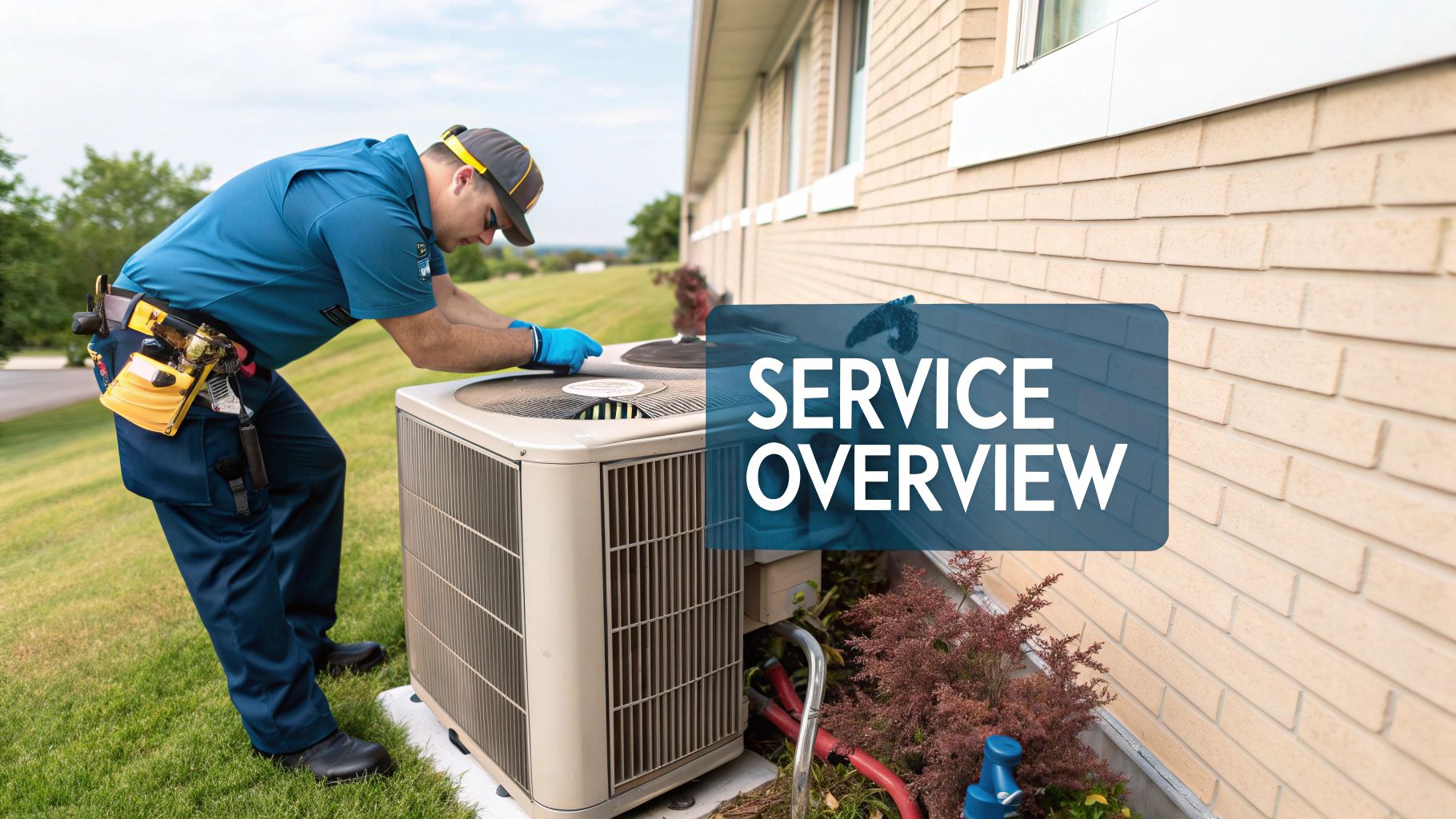
At its core, a service contract is a straightforward agreement between you and your HVAC company. For a set fee—paid either monthly or annually—we commit to keeping your system running like a well-oiled machine. This is all about proactive care, not reactive repairs.
It's a lot like taking care of your car. You wouldn't dream of driving it for 50,000 miles without an oil change or a tune-up, would you? Your AC unit works just as hard, especially here in Florida. A service plan is that scheduled maintenance that ensures it runs efficiently all year long, saving you from a costly breakdown when you need it most.
To give you a clearer picture, here's a quick rundown of what a typical service contract covers.
AC Service Contract at a Glance
| Feature | What It Means for You |
|---|---|
| Scheduled Tune-Ups | Your AC gets 2 comprehensive check-ups per year, keeping it ready for both the heat and the (brief) cold. |
| Priority Service | If your system does fail during a heatwave, you get to jump to the front of the line for emergency repairs. |
| Repair Discounts | You'll save money (often 15-20%) on any necessary repairs, including both parts and labor. |
| No Overtime Fees | Need help on a weekend or after hours? You won't pay extra for emergency service calls. |
These features work together to shift you from a "call when it's broken" mindset to a "keep it from breaking" strategy, which always saves stress and money in the long run.
What's Typically Included
While the specifics can differ from one company to the next, most quality service contracts bundle together a few key benefits.
- Scheduled Tune-Up Visits: You’ll get two detailed check-ups a year. We'll get your system ready for summer in the spring and check on the heating components in the fall.
- Priority Service: This is huge in Palm Beach County. When the temperatures spike and everyone's AC is failing, contract customers get serviced first. No waiting for days in the heat.
- Discounts on Repairs: If something does need fixing, you'll get a nice discount on the parts and the labor involved. It really helps soften the blow of an unexpected repair bill.
- No Overtime Charges: Many plans do away with those extra fees for nights, weekends, or holiday service calls.
A well-structured service contract does more than just schedule appointments. It’s an investment in your system’s longevity, efficiency, and your family’s uninterrupted comfort, protecting you from the stress and expense of sudden failures.
The Foundation of a Healthy AC System
The preventative maintenance visit is the heart and soul of any service agreement. During these tune-ups, our certified technicians go through a meticulous checklist.
They'll do things like tighten electrical connections, lubricate moving parts, clean the coils, and clear out the drain lines. It’s a comprehensive physical for your AC. This regular attention not only helps your system run at peak efficiency (lowering your energy bills), but it also lets a pro spot a worn-out part before it fails completely. That's how we prevent a minor issue from snowballing into a full-blown system meltdown.
To see exactly what goes into a tune-up, you can learn more about our comprehensive AC maintenance services and how they keep your system humming along.
The Real Value of Proactive AC Maintenance
It's easy to look at an air conditioning service contract and see it as just another monthly bill. But that misses the bigger picture. Think of it less like an expense and more like an investment—one that pays off big time in both peace of mind and real dollars saved.
That value really hits home during a classic Palm Beach heatwave, right when your AC is working its hardest and you need it the most.
To really see what I mean, let’s look at a classic neighborhood scenario.

A Tale of Two Homeowners
Picture this: It's a sweltering July afternoon in Boca Raton. The thermometer is creeping past 95 degrees, and the humidity is so thick you can practically swim through it. All of a sudden, two air conditioners on the same block sputter and die.
Homeowner A: The Planner
This homeowner has an AC service contract. They make one simple call to their HVAC company and immediately feel a sense of relief. As a contract holder, their call gets flagged for priority service.
A technician is at their door within a few hours. The culprit is a failing capacitor—a common issue, but one that brings the whole system to a halt. Luckily, the tech had already noted the part was weakening during the scheduled spring tune-up. Thanks to their plan, the homeowner gets a 20% discount on the repair and doesn't pay a dime in emergency service fees.
Homeowner B: The Gambler
This homeowner doesn't have a plan. They're frantically Googling for any HVAC technician who can come out now. But every company is swamped. The earliest anyone can promise to show up is three days from now.
When a technician finally arrives, the diagnosis is identical: a dead capacitor. But this homeowner pays the full, undiscounted price for the part and labor, plus a painful emergency after-hours fee. Their total bill is nearly double what their neighbor paid, and that doesn't even account for the three miserable days their family spent sweating it out.
This isn't just a story—it's a reality we see play out all over Palm Beach County every summer. A service contract turns a potential crisis into a manageable hiccup, shielding you from price gouging, agonizingly long waits, and a whole lot of stress.
The Financial Ripple Effect of Maintenance
The benefits of a service contract go way beyond just getting you out of a jam. Consistent, professional maintenance creates a positive ripple effect, saving you money all year long. It’s a strategy built on the same core ideas as master equipment maintenance scheduling in the industrial world, where the whole game is about maximizing performance and preventing downtime.
This kind of proactive care helps your wallet in three major ways:
- Lower Monthly Energy Bills: A finely tuned AC unit simply runs better. When the coils are clean, the parts are lubricated, and the refrigerant is at the perfect level, your system doesn't have to strain to cool your home. It uses less electricity, which means a lower FPL bill every single month.
- Stopping Catastrophes Before They Start: Little problems have a nasty habit of becoming big, expensive ones. A frayed wire or a clogged drain line might seem minor, but if left alone, they can lead to a burnt-out compressor—a repair that can cost thousands. Regular check-ups catch these small issues early.
- Getting More Years Out of Your System: Your AC is one of the biggest investments in your home. And just like a car, its lifespan depends heavily on proper maintenance. Routine professional care cuts down on the daily wear and tear, helping you squeeze more years of reliable service out of your unit. You can learn more about this in our guide on how regular maintenance extends your AC's lifespan.
This smart approach is catching on. The North American HVAC industry is forecast to reach $46.93 billion by 2025, largely because more people are focused on energy efficiency. Experts agree that a good service plan can trim an HVAC system's energy use by 5–15% a year, which is a significant chunk of change for any family.
Ultimately, an air conditioning service contract changes your entire relationship with your AC system. You stop living in a reactive cycle of "wait for it to break, then pay a fortune to fix it." Instead, you shift to a proactive, cost-saving strategy of smart, consistent care.
How to Choose the Right Type of Service Contract
Picking an air conditioning service contract can feel a lot like choosing a cell phone plan. You’re presented with different tiers, features, and price points, and it's easy to get a little lost in the details. The real goal is to find that sweet spot—the plan that gives you exactly what you need without paying for extras you won't use or, worse, leaving you under-protected when you need it most.
I like to use a car maintenance analogy. If you just drove a brand-new car off the lot, you’d probably stick to the basic, scheduled oil changes to keep it running perfectly. But what about an older car with 100,000 miles on the clock? You’d likely feel a lot better with a comprehensive warranty that covers those expensive, out-of-the-blue repairs. Your AC system is no different.
The right choice really comes down to three things: the age of your AC unit, your budget, and frankly, your personal tolerance for risk. Let’s walk through the common options you’ll come across here in Palm Beach County so you can make a smart, confident decision.
The Basic Maintenance Plan: Your Essential Tune-Up
First up, you have the foundational plan. Most companies call this a preventative or basic maintenance agreement. Think of this as the essential "oil change" for your air conditioner. It’s designed to cover the bare necessities to keep your system humming along efficiently.
This type of contract is all about proactive care. Its main selling point is the two scheduled tune-up visits each year—one in the spring to get ready for our brutal summer heat, and another in the fall to check on the heating side of things.
A basic maintenance plan is a fantastic fit for:
- Newer AC Systems: If your unit is still covered by the manufacturer's warranty (usually 5-10 years), this plan takes care of the professional maintenance required to keep that warranty active.
- Budget-Conscious Homeowners: It’s the most affordable way to have a pro lay eyes on your system twice a year. This alone helps lower energy bills and catch small problems before they become big ones.
- The DIY-Savvy: If you’re comfortable troubleshooting minor issues yourself but want an expert to handle the deep-dive system checks, this is the perfect plan for you.
This infographic gives a great visual of how a basic plan is the starting point for more complete coverage.
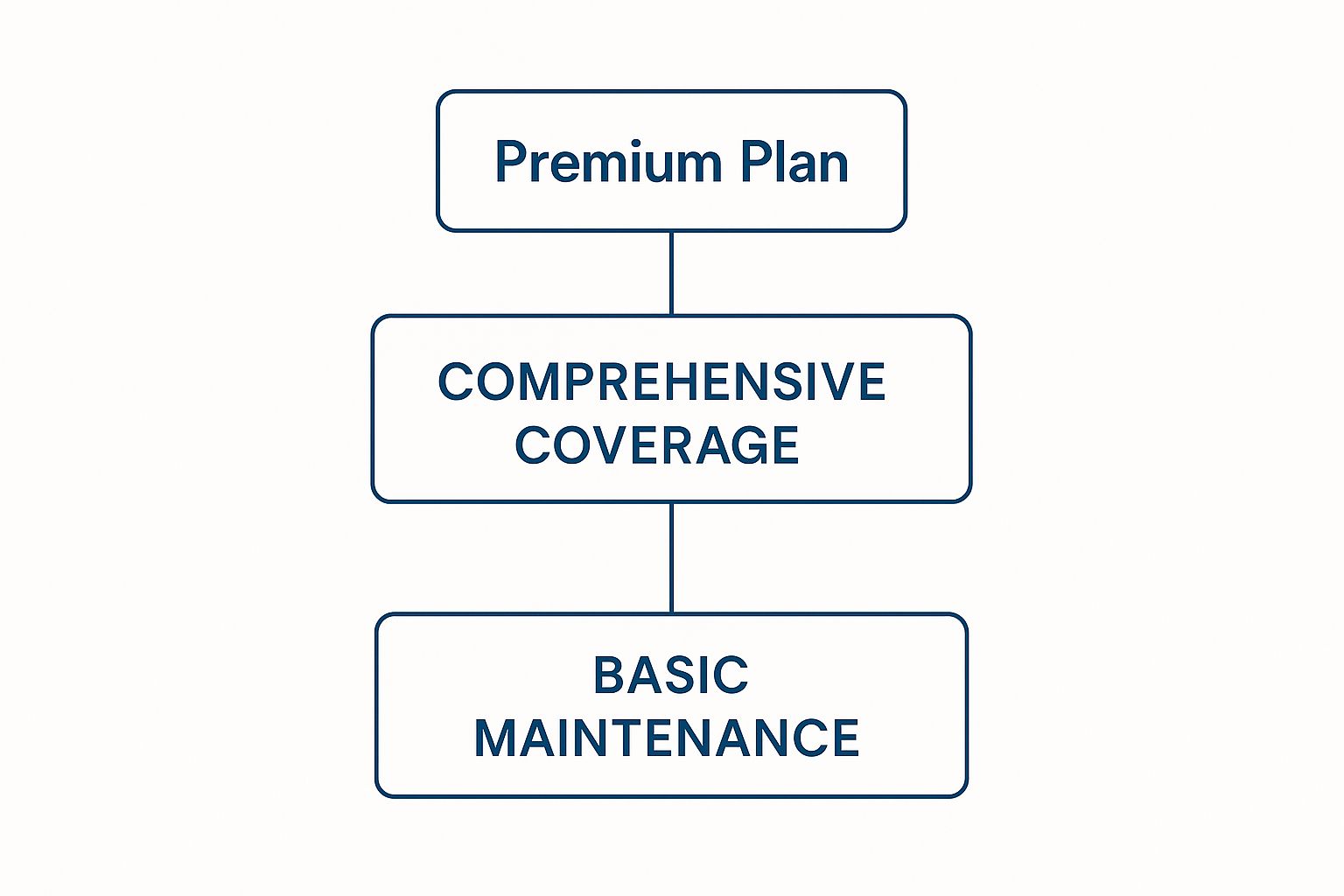
As you can see, each level builds on the one before it, adding more layers of protection and peace of mind.
The Comprehensive Coverage Plan: The Peace of Mind Package
Taking a step up, we get to the comprehensive plan. This is easily the most popular choice for homeowners, and for good reason—it hits that perfect balance between affordability and real-world coverage. It’s like getting your oil change plus a solid safety net for the most common repairs.
Beyond the two yearly tune-ups, a comprehensive air conditioning service contract usually throws in some significant discounts on repairs. We're often talking 15-20% off both parts and labor if something breaks. On top of that, many of these plans will waive those dreaded overtime or emergency service fees, which can literally save you hundreds if your AC quits on a Saturday night.
A comprehensive plan is perfect for homeowners who want to budget for AC care without worrying about the sticker shock of a sudden, unexpected repair. It’s a smart middle-ground for most systems.
This plan really shines for:
- Mid-Life AC Systems: If your unit is between 5 and 12 years old, it's likely past its initial labor warranty. This plan provides a much-needed financial cushion.
- Busy Families: Let's be honest, who has time to deal with a broken AC? The priority service and repair discounts that come with these plans offer serious value and convenience.
The Premium Plan: The All-Inclusive Warranty
At the very top of the ladder is the premium plan, what some people call the "bumper-to-bumper" warranty. This is the most robust protection you can buy, designed to almost completely eliminate out-of-pocket repair costs. It’s the ultimate set-it-and-forget-it option for anyone who values maximum protection and predictable annual spending.
Premium plans bundle everything from the lower tiers—the maintenance, the priority service, the waived fees—but then they take a huge step forward. They often cover the full cost of both labor and parts for most common failures, like a bad fan motor, a faulty capacitor, or a worn-out contactor. Some of the best agreements even include allowances for major components.
This top-tier coverage is ideal for:
- Older or Out-of-Warranty Systems: Once an AC unit is over 12 years old, the odds of a major repair go way up. A premium plan can be the difference between a manageable annual fee and a sudden multi-thousand-dollar bill.
- Rental Property Owners: For landlords, this is a no-brainer. A premium plan ensures tenant AC issues are handled immediately with a fixed, predictable cost, keeping everyone happy.
To make it even clearer, let's look at these plans side-by-side.
Comparing AC Service Contract Tiers
Seeing the options laid out can help you zero in on the best fit for your home and your AC unit. This table breaks down what you generally get with each level of service.
| Plan Type | Typical Coverage | Best For |
|---|---|---|
| Basic Maintenance | Includes two annual tune-ups to keep the system efficient and the manufacturer's warranty valid. | Newer systems (under 5 years old) and homeowners on a tight budget. |
| Comprehensive | Includes tune-ups, plus discounts (e.g., 15%) on parts and labor for repairs and waived emergency service fees. | Mid-life systems (5-12 years old) and anyone wanting a balance of prevention and repair protection. |
| Premium | Includes all features of the comprehensive plan, but also covers the full cost of most common parts and labor. | Older systems (12+ years old) and property owners who want predictable costs and maximum coverage. |
By understanding these tiers, you can move past the sales pitches and confidently pick the air conditioning service contract that truly aligns with your system’s age, your budget, and how much you value peace of mind.
What to Look for in a Palm Beach HVAC Provider
https://www.youtube.com/embed/ndT-Dx1Tzc0
Choosing an air conditioning service contract is as much about the company you hire as it is about the plan you pick. The best contract on paper means nothing if the team behind it is unreliable, inexperienced, or just plain unavailable when you need them most.
Here in Palm Beach County, your AC isn't a luxury—it's a lifeline. Partnering with a trustworthy contractor is non-negotiable.
Think of it like finding a family doctor. You wouldn't just go with the cheapest option. You’d want someone with the right credentials, a great local reputation, and a team you feel comfortable with. The same logic applies to your HVAC provider. You're looking for a long-term partner who will deliver on their promises, especially when you're in a jam.
The good news is, this doesn't have to be overwhelming. If you focus on a few key qualifications and ask the right questions, you can easily sort the pros from the rest.
The Non-Negotiable Credentials
Before you even glance at a service plan, there are a few absolute must-haves to check off your list. These are the basics that separate a professional operation from a risky gamble. If a company can't meet these standards, it's an immediate red flag.
Start with this simple checklist:
- Proper Licensing: Florida requires HVAC contractors to be state-licensed. This isn't just a piece of paper; it proves they've met strict educational and testing requirements to do the job safely and correctly.
- Comprehensive Insurance: Make sure they carry both liability insurance and workers' compensation. This is crucial—it protects you, your home, and their own employees if an accident happens on your property.
- Positive Local Reviews: What are your neighbors saying? Check recent reviews on Google and Yelp. You're looking for consistent feedback on things like punctuality, professionalism, and the quality of their work.
A good HVAC company will have no problem showing you their license and insurance credentials. If they get defensive or hesitant when you ask, that tells you everything you need to know. Time to move on.
Technical Expertise and Brand Experience
Once you've confirmed a company is legit, it's time to dig into their technical skills. Not all technicians have the same level of training, and that difference directly impacts the quality of service you’ll get. A well-maintained system is a direct result of a knowledgeable expert.
A company's commitment to quality really shows in how much they invest in training their team.
One of the best credentials to look for is NATE certification. NATE (North American Technician Excellence) is the gold standard in our industry. A NATE-certified technician has passed tough, real-world exams, proving they truly know their stuff when it comes to servicing and repairing HVAC systems.
You should also ask if they have experience with your specific AC brand, whether it's a Trane, Carrier, Goodman, or something else. Most good techs can work on any system, but someone who specializes in your brand will know its common quirks and can diagnose problems much faster. For more tips on this, check out our guide on the 7 ways to find local HVAC contractors near me.
Availability and Emergency Response
Finally, let’s talk about reality in Palm Beach County. Your AC will never break down at a "good" time. It'll be on the hottest Saturday of the summer or in the middle of the night. You need to know your service provider will be there for you when it counts.
Ask them these questions directly:
- Do you offer true 24/7 emergency service?
- If I call after hours, will I talk to a person or just get an answering machine?
- What's your guaranteed response time for contract customers when their AC is out?
A company that offers round-the-clock service is showing you they're serious about taking care of their customers. This is one of the most valuable benefits of a solid air conditioning service contract—peace of mind that you'll never be left sweating for long.
Understanding the Fine Print in Your AC Agreement

Let's be honest, an air conditioning service contract can look like a legal document designed to put you to sleep. But it’s worth grabbing a cup of coffee and giving it a real look. Think of it as the "rules of the game" for your AC care.
A few minutes spent understanding these rules now can save you a world of headaches and surprise bills down the road, especially when your AC decides to quit on a sweltering July afternoon. The fine print is where the real promises are made, outlining exactly what the HVAC company will do for you and what your responsibilities are.
Key Clauses and What They Mean
Every contract has a few crucial sections that deserve a closer look. These are the parts that dictate how the agreement actually works in the real world.
- Renewal Policies: How does the contract continue? Many renew automatically, so you'll want to know that to avoid an unexpected charge. Or do you need to actively opt-in each year? This is a simple detail that prevents your coverage from accidentally lapsing.
- Cancellation Terms: Life happens. You might sell your home or just decide to switch companies. Find out what it takes to cancel the agreement. Are there penalties? Do you have to give 30 or 60 days' notice?
- Transferability Clause: If you move, can the new homeowners take over the contract? For buyers in Palm Beach County, an existing service plan can be a nice little perk.
It’s also helpful to know how the company manages its paperwork. Many professional outfits now use smarter billing and invoicing methods to keep things clear and simple for their customers.
Decoding Exclusions and Hidden Fees
This is arguably the most important part of the entire document. The "Exclusions" section is where the company tells you what is not covered. Skipping this part is the fastest way to get a frustrating and expensive surprise.
Common things you’ll find in the exclusions list include:
- Refrigerant: Due to fluctuating costs, the price to recharge refrigerant is often not included or only partially covered.
- Major Components: Big-ticket items like a compressor or evaporator coil are usually covered by the manufacturer's warranty for the part itself, but not the labor to install it. The contract should spell out how it works with any existing warranties.
- Ductwork and Vents: Most service plans focus strictly on the main HVAC unit, not the network of ducts that carry the cool air through your home.
Beyond what’s excluded, keep an eye out for other potential charges. Does the company tack on a "trip fee" or "diagnostic fee" for every visit, even for members? Those little fees can add up quickly.
Essential Questions to Ask Your Provider
Before you sign anything, have a real conversation with the provider. A good company will be happy to answer your questions and make sure you're comfortable.
Don't be shy about asking for clarification. A trustworthy technician wants you to understand exactly what you're paying for. Think of these questions as your tool for making sure the plan is the right fit.
Here are a few questions I always recommend asking:
- Is there a cap on how many service calls I can make each year?
- How do you schedule the two maintenance visits? Do you reach out to me, or am I responsible for remembering to book them?
- When you replace a part, do you use original factory parts (OEM) or cheaper generic ones?
- What's the process if my AC needs a repair that isn't fully covered by the contract?
Getting this kind of detail is becoming the norm. The global HVAC maintenance market was valued at $92.8 billion in 2024 and is expected to hit over $146 billion by 2032. As the industry grows, companies are using technology to offer more transparent and customer-focused contracts. Asking these questions ensures you're getting a modern plan that truly has your back.
Got Questions? Let's Clear Things Up
Even after exploring the details, it's completely normal to have a few questions lingering. Deciding how to best care for your home's cooling system is a big deal, and you should feel 100% confident before you make a move.
This is where we tackle the most common questions we hear from homeowners every day. We’ll give you straight, no-nonsense answers to help you figure out if a service contract is the right fit for your Palm Beach home.
Are These Plans Actually Worth the Money?
This is the big one, isn't it? It's the first thing most people ask, and for good reason. Is it smarter to pay an annual fee, or just cross your fingers and pay for repairs as they happen?
Frankly, when you look at the real-world costs, the value of a contract becomes crystal clear.
Think about it this way: a basic maintenance plan for the year often costs less than a single emergency service call on a sweltering Saturday afternoon. A service plan acts as a shield for your budget, protecting you from the shock of a sudden, expensive repair bill when you least expect it.
But the savings don't stop there.
- Lower Power Bills: A clean, well-tuned AC unit simply runs more efficiently. That efficiency shows up directly on your monthly FPL bill.
- A Longer-Lasting System: Regular maintenance is like a spa day for your AC. It reduces wear and tear, helping you push back that dreaded—and expensive—full system replacement for a few more years.
- Catching Disasters Early: A technician can spot a failing capacitor that costs $100 to replace today. If left alone, that same part could burn out your compressor, leading to a $2,000 repair next month.
When you add it all up, the contract doesn't just pay for itself. It actively puts money back in your pocket over time.
What's the Difference Between a Service Contract and a Home Warranty?
This is a common point of confusion. Both seem to offer protection from repair costs, but they are fundamentally different, and knowing that difference is key to getting the right coverage.
A home warranty is basically a broad insurance policy. It covers a bunch of different things in your house, from the dishwasher to your plumbing. When something breaks, you pay a service fee, and the warranty company dispatches a contractor from their network. Their model is entirely reactive—they fix things after they break.
An AC service contract is a proactive partnership with a local HVAC company. Its main job is to prevent breakdowns through expert care. A home warranty is a reactive insurance product designed to cover repairs after they happen.
An air conditioning service contract, on the other hand, is a specific agreement with your chosen HVAC provider. Its primary goal is proactive: to keep your AC running smoothly so it doesn't break down in the first place. You get to know your technicians, and they get to know your system. The priority service and repair discounts are fantastic perks built on that foundation of preventative care.
Can I Get a Contract If My AC Unit is Old?
Absolutely. In fact, an older unit is probably the best candidate for a service contract. Just like an older car needs more regular check-ups to stay on the road, an aging AC system benefits tremendously from consistent, professional attention.
For a system that's over 10-12 years old, a service contract is a game-changer:
- It keeps the unit running as efficiently as it can, squeezing every last bit of cool air out of it without sending your energy bills through the roof.
- It allows a technician to find and replace worn-out parts before they cause a total system failure—a much more common risk in older units.
- It acts as a financial safety net. Premium plans can cover the full cost of many common repairs, which become more and more likely as a unit ages.
Most reputable HVAC companies are more than willing to offer plans for older equipment. They might suggest a more comprehensive plan to give you adequate protection, but it’s one of the smartest ways to manage an aging system and delay the five-figure cost of a full replacement. This focus on reliability is why the global air conditioning maintenance market is expected to hit $150 billion in 2025. As people prioritize efficiency, service contracts are becoming a standard part of smart homeownership, a trend explored in recent analysis of the air conditioning maintenance market.
Ready to protect your home with an air conditioning service contract that offers true peace of mind? The team at Florida Cooling Group is here to help you find the perfect plan for your needs and budget. Contact us today to get a free quote and enjoy uninterrupted comfort all year long!

Charlie Hadida is a senior HVAC technician and the SEO lead at Florida Cooling Group, with years of real-world experience diagnosing, repairing, and installing residential and commercial HVAC systems throughout Palm Beach and Broward County.
Unlike generic marketing content, Charlie’s work is grounded in on-site service experience — from troubleshooting electrical and airflow issues to overseeing full system replacements, crane lifts, and code-compliant installations. His technical background allows him to translate complex HVAC concepts into clear, accurate, and helpful information for homeowners, property managers, and business owners.
In addition to working in the field, Charlie leads Florida Cooling Group’s SEO and content strategy, ensuring that all service pages, guides, and educational resources reflect real conditions technicians encounter every day. This includes topics such as AC repair, preventive maintenance, system replacements, energy efficiency, permitting requirements, and South Florida–specific climate challenges.
Charlie plays an active role in shaping Florida Cooling Group’s service standards, maintenance programs, and long-term customer education efforts. His combined technical and SEO expertise helps bridge the gap between what customers search for online and what actually matters when servicing HVAC systems in Florida’s demanding environment.
Licensed HVAC Technician (Florida)
Residential & commercial HVAC experience
Hands-on system diagnostics, repairs, and installations
Experience with rooftop units, split systems, and package units
Local experience serving Palm Beach & Broward County
Areas of Expertise:
AC Repair & Troubleshooting
Preventive Maintenance & Service Agreements
HVAC System Replacements & Change-Outs
Commercial HVAC Systems
South Florida HVAC Codes & Permitting