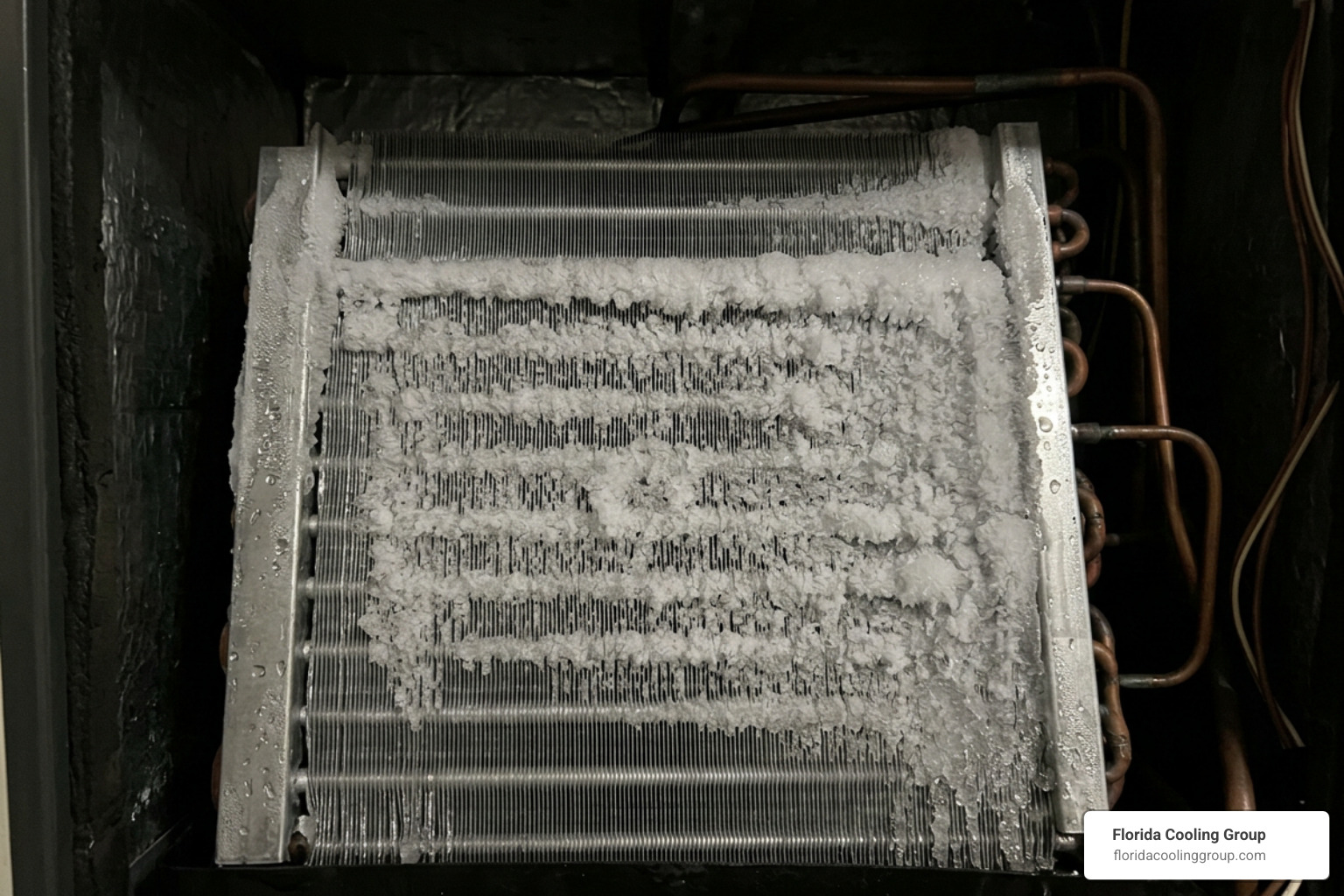
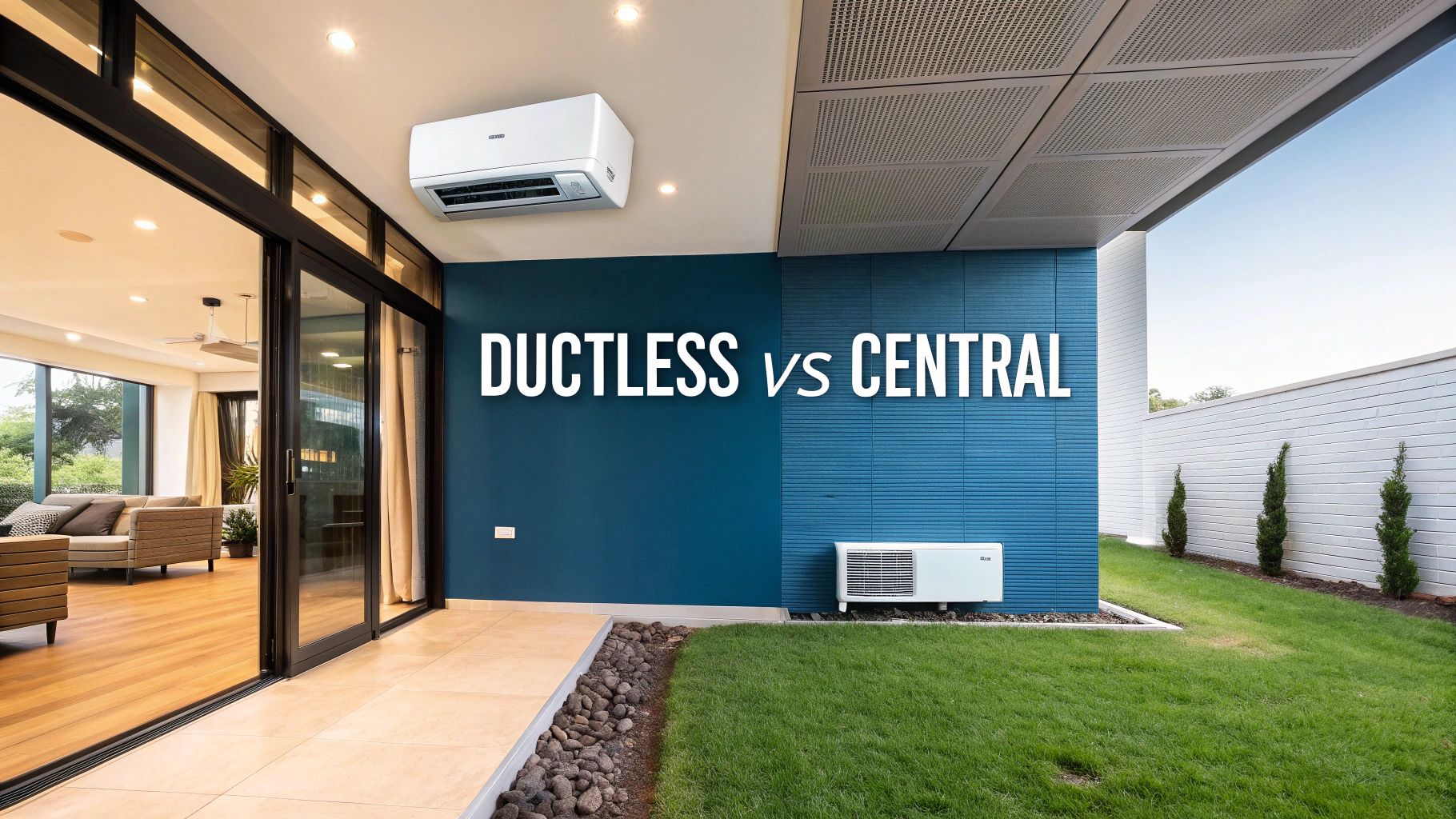
Choosing between a ductless mini split vs central air system really boils down to one key question: do you have existing ductwork? If not, mini splits offer targeted, zoned cooling that's hard to beat. If you do, central air provides that familiar, uniform, whole-home cooling. From there, your home’s layout, budget, and how you actually live in your space will point you to the best fit.
Choosing the Right Cooling System for Your Home

When it's time to upgrade your home's climate control, it’s not about finding the "best" system, but the right one for your specific situation. For decades, central air was the go-to for whole-home cooling. But now, ductless mini splits have emerged as an incredibly flexible and efficient alternative.
Figuring out the core differences is the first step to making a smart investment. This guide breaks down everything you need to know—from installation headaches and costs to long-term efficiency and day-to-day comfort.
Ductless Mini Split vs Central Air At a Glance
Let's start with a quick side-by-side. This table gives you a snapshot of how these two popular cooling technologies stack up.
| Feature | Ductless Mini Split | Central Air |
|---|---|---|
| Best For | Homes without ductwork, additions, or zoned cooling needs. | Larger homes with existing, well-maintained ductwork. |
| Installation | Less invasive; requires a small hole in the wall per unit. | More complex; requires a network of ducts throughout the home. |
| Control | Individual temperature control for each room or "zone." | Single thermostat controls the temperature for the entire house. |
| Efficiency | Generally higher due to no energy loss from duct leaks. | Can lose 20-30% of cooled air through duct leaks. |
This gives you a starting point. Now, we'll dive deeper into what these differences mean for your home and your wallet.
How Each HVAC System Works
To really get to the bottom of the ductless mini split vs. central air debate, you first have to understand how fundamentally different they are in their approach. Think of it this way: one is a whole-home solution, and the other is a targeted specialist.
A central air system is the classic setup most of us are familiar with. It works from a central point, kind of like the heart of your home's comfort. A big unit outside cools refrigerant and sends it to an indoor coil, which is usually part of your furnace or air handler. A powerful fan then blows air over that chilly coil, and that cool air travels through a network of ducts hidden in your walls and ceilings, eventually coming out of vents in each room. For a deeper dive, you can learn more about how central air conditioning works in our detailed guide. The whole system is built for one thing: consistent, even cooling everywhere from a single thermostat.
The Mechanics of Ductless Mini Splits
Ductless mini splits take a completely different route. They still have an outdoor compressor, but that's where the similarities end. Instead of feeding one big indoor unit, the outdoor unit connects to multiple, smaller indoor units—often called "heads"—through thin refrigerant lines.
These compact indoor heads are mounted directly on the wall or ceiling of the specific room or "zone" you want to cool. Because the air is delivered right at the source, there's absolutely no need for ductwork. It's a direct-to-room delivery system, and the best part is that you can control each indoor unit on its own. That means you can have the bedroom at a cool 68°F while the unused guest room is off completely.
Key Takeaway: The real difference is how they deliver the cool air. Central air uses a single source and a network of ducts to cover the whole house. Mini splits use multiple, targeted air handlers to cool individual zones directly.
A Tale of Two Technologies
Central air has been the go-to standard in American homes for decades, really taking off after World War II. It was, and still is, an effective way to cool an entire house at once.
But then, mini split technology came along. First developed in Japan back in the 1970s and 1980s, it offered a brilliant, flexible alternative that didn't require tearing up walls to install ducts. This innovation has seriously caught on, grabbing a huge piece of the air conditioner market worldwide.
Comparing Installation and Upfront Costs

Let's talk about the bottom line, because for most homeowners, the initial investment is a huge deciding factor. When you're weighing a ductless mini split against central air, the biggest difference in installation and cost boils down to one word: ductwork.
If your home doesn’t have ducts, a mini split system is almost always the simpler, less disruptive choice. The process is pretty straightforward. We mount the indoor units on a wall and drill a small, three-inch hole to run a conduit to the outdoor compressor. No major demolition, no tearing into drywall. We can often get it done in a single day.
Central air is a different beast entirely if ducts aren't already in place. It becomes a massive construction project. We have to open up walls, ceilings, and crawl spaces to run the ductwork. It’s messy, invasive, and all that extra labor drives the final price up considerably.
Breaking Down the Financials
When you get a quote, you're looking at more than just the price of the AC unit. The total cost is a combination of the equipment, the labor to install it, and any other work needed to get it running.
- Ductless Mini Split: A simple single-zone system to cool one large room or an addition will typically run between $3,500 and $7,000 installed. If you're looking to cool a whole house with multiple indoor units, the price can range from $10,000 to $20,000 or even more.
- Central Air: If you have good, clean ductwork already installed, replacing a central AC unit usually costs between $5,000 and $12,000. The ductwork is the real wild card.
The need for brand-new ductwork can easily add another $5,000 to $10,000+ to your central air installation. For homes without that existing infrastructure, this often makes central air the more expensive option right out of the gate.
The Hidden Costs of Ductwork
If you're set on adding central air to a house that's never had it, you have to look at the full scope of the project. It’s crucial to understand the potential HVAC ductwork replacement cost, as this will be a huge slice of your budget.
And don't forget other components that contribute to overall comfort and air quality. You might also want to factor in things like air exchanger installation costs to get a truly complete picture of your investment.
Ultimately, while central air can be cheaper if the ducts are already there, the less invasive nature of mini splits makes them an incredibly appealing and often more affordable choice for older homes, retrofits, and new additions.
Energy Efficiency and Long-Term Operating Costs
The sticker price for a new HVAC system is just the beginning of the story. The real cost of ownership shows up on your utility bill, month after month, for years to come. When you stack up ductless mini splits vs. central air, their long-term operating costs are worlds apart, and it all boils down to energy efficiency.
Central air has been the standard for decades, but it has a built-in weakness: the ductwork. That massive network of channels snaking through your attic, walls, and crawl spaces is prone to leaks, gaps, and poor insulation. In fact, it’s not uncommon for forced-air systems to lose 20-30% of the conditioned air before it ever reaches the vent. You're literally paying to cool your attic.
The Ductless Advantage in Efficiency
This is where ductless systems really shine. They completely sidestep the ductwork problem. The indoor unit delivers cool air directly into the room it’s in, so there's no opportunity for that precious cool air to escape along the way.
This design also gives you incredible control over your home's climate. With mini splits, you can create "zones," cooling only the rooms you're actually using. Why waste money blasting AC into an empty guest room or a rarely used formal living area? Simply turn off the units in those spaces and watch the savings add up.
Ductless mini split systems are taking off globally, and for good reason—their efficiency and zonal control are hard to beat. By eliminating ductwork, they slash energy waste and reduce operating costs, making them a very smart financial choice for a growing number of homeowners.
Understanding Key Efficiency Metrics
So, how do you measure all this? We use a SEER (Seasonal Energy Efficiency Ratio) rating. Think of it like MPG for your car—the higher the SEER number, the more efficient the system is.
While you can find high-efficiency central air units, the best ductless mini splits often blow them out of the water, with some models boasting ratings above 30 SEER.
A huge part of this is their inverter technology. Unlike a traditional central AC compressor that just slams on and off, an inverter-driven compressor works more like the cruise control in your car. It constantly adjusts its speed to precisely meet the cooling demand, using only the exact amount of energy needed to hold the temperature steady. This avoids the massive energy spikes that come with a conventional system's start-and-stop cycle.
Taking a closer look at high-efficiency HVAC systems will give you a much clearer picture of how this technology directly impacts your monthly expenses.
And remember, your HVAC doesn't work in a vacuum. Other factors can help ease its workload. For example, understanding the energy efficiency benefits of ceiling fans can show you how to supplement your cooling and reduce your system's runtime.
At the end of the day, central air does a great job of cooling your whole house at once, but it's an all-or-nothing approach that can be inefficient. For most homeowners looking to cut down on long-term costs, the ductless system's ability to avoid duct losses and provide on-demand, zonal cooling makes it the clear winner.
A Practical Guide to Home Comfort and Control
When you're picking an HVAC system, comfort is about more than just hitting a number on the thermostat—it's about control. The whole ductless mini split vs. central air debate really boils down to how you want to live in your space: do you prefer personalized, room-by-room comfort, or a simple, uniform temperature everywhere?
A ductless mini split system is the king of zonal control. Each indoor unit has its own thermostat, which means you can have total command over individual rooms. The living room can be a cozy 72°F while the bedroom stays at a crisp 68°F for sleeping, and neither one affects the other. This setup is a game-changer for getting rid of those annoying hot and cold spots that plague homes with just one thermostat.
Tailoring Your Home's Climate
Central air, on the other hand, is built for one thing: whole-home consistency. It’s fantastic at keeping every room connected to the ductwork at the exact same temperature. For many families, that simple, set-it-and-forget-it approach works just fine. But it’s an all-or-nothing deal. If you and your partner can never agree on the temperature, get ready for some serious thermostat wars.
Think about a common problem: your home office faces south and gets baked by the afternoon sun, while the kitchen on the north side stays cool. With central air, your only option is to crank the AC and freeze out the rest of the house just to make your office bearable. A mini split completely solves this by letting you blast cool air exactly where you need it, and only when you need it.
Key Insight: Real comfort is all about flexibility. Ductless mini splits bend to fit your life by cooling specific zones, while central air makes your life bend to its single, uniform temperature.
Beyond Temperature: Noise and Air Quality
Comfort isn't just felt; it's also heard and breathed. The environment your system creates is just as important as the temperature, and this is another area where the two systems part ways.
- Indoor Noise Levels: Ductless mini splits are impressively quiet. Since the loud compressor unit lives outside and the indoor heads use small, gentle fans, they usually hum along at a barely-there 20-30 decibels. You'll definitely notice when a central air system kicks on—that powerful blower pushing air through the vents makes its presence known.
- Air Filtration: Central air systems funnel all your home's air through a single, powerful filter at the main unit. You can upgrade this with a high-MERV filter that’s great at trapping tiny allergens and pollutants for the entire house. Ductless units each have their own washable filters, which are good for catching dust but just can't compete with a serious central filter when it comes to microscopic particles.
In the end, it really comes down to what your family needs. If you want customized temperature zones and an almost silent system, the control you get from a ductless setup is hard to beat. But if you're looking for consistent cooling for the whole house and top-tier air filtration, central air is still a very solid choice.
Making the Final Decision for Your Home
Choosing between a ductless mini-split and central air really boils down to your specific home and what you value most in a cooling system. There's no one-size-fits-all answer here; the best choice is the one that fits your situation like a glove. Let's walk through the final considerations to help you feel confident in your decision.
A ductless mini-split is often the no-brainer for older homes that were built before central air was common and therefore have no ductwork. It's also the perfect fix for home additions, converted garages, or any space where trying to extend existing ducts would be a nightmare—both practically and financially. If you've got family members constantly fighting over the thermostat, the zonal control of a mini-split system can bring peace to the household.
This decision tree gives you a great visual for what matters most to you.
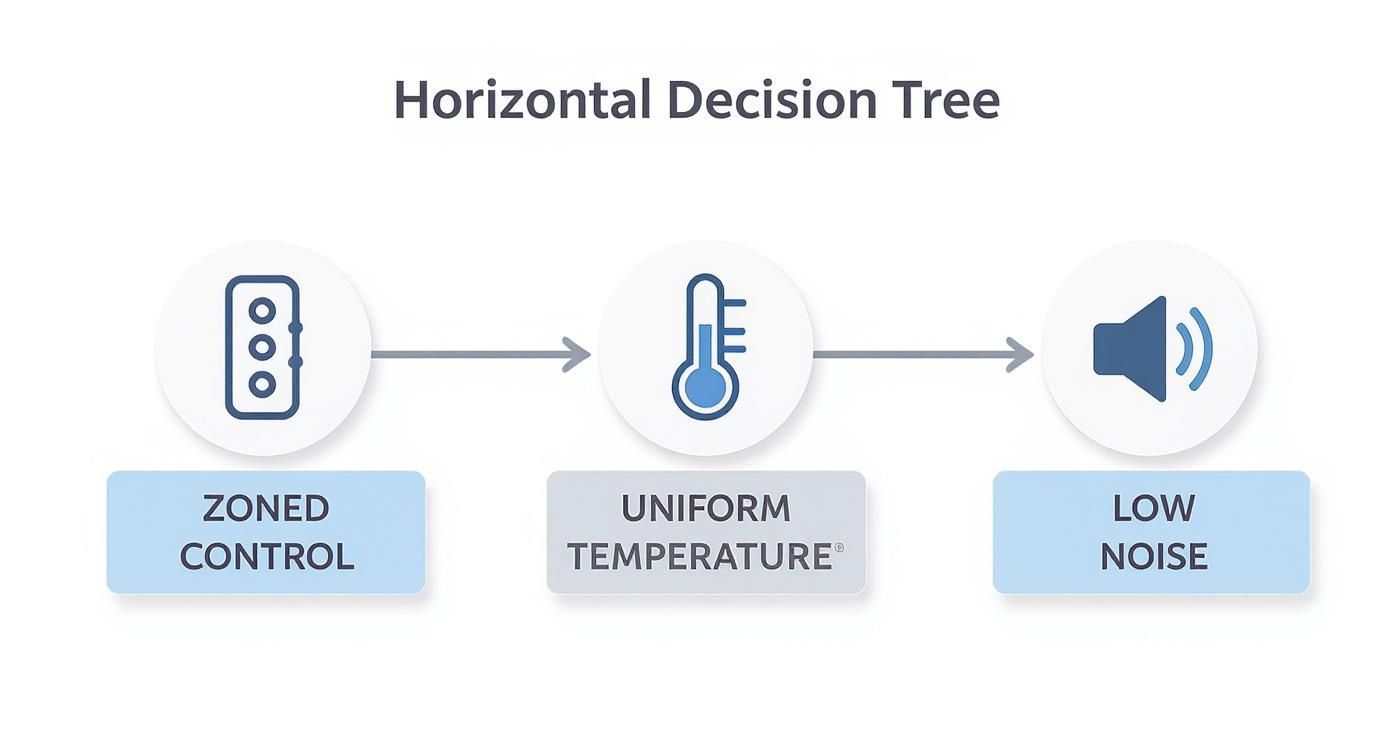
As you can see, the right path depends on whether you're after personalized temperature zones, uniform cooling everywhere, or the quietest possible operation.
When Central Air Is the Smart Choice
On the flip side, central air is still the most practical and budget-friendly choice for a lot of homeowners. If you're building a new house or your current home already has a solid duct system in place, upgrading to a modern, high-efficiency central AC unit is usually the smoothest route. It delivers that consistent, whole-home cooling you're used to and often has better options for air filtration for the entire house.
From a cost perspective, mini-splits typically have a higher price tag upfront, but they often make up for it with lower energy bills down the road. Being able to cool only the rooms you're using cuts down on a ton of wasted energy. It's no surprise the U.S. mini-split market was valued at around USD 1.4 billion and is expected to keep climbing. You can explore more about the mini split market trends to see just how popular they've become.
Final Recommendation: Go with a ductless mini-split if you need flexibility, top-tier efficiency, or have to solve tricky cooling problems in specific areas. Stick with central air if you already have ductwork and just want simple, uniform comfort throughout your entire home.
Common Questions We Get Asked
Even after comparing ductless mini splits and central air side-by-side, people still have some lingering questions. It's totally normal. Here are some of the most frequent ones we hear from homeowners trying to make that final decision.
Can You Really Cool a Whole House with a Mini Split?
You absolutely can. A multi-zone ductless system is designed for just that. It works by connecting one outdoor unit to several indoor air handlers, with each handler managing the temperature in a specific room or "zone." This gives you total home comfort plus the ability to set different temperatures in different rooms.
Now, it's worth noting that installing a full multi-zone system can sometimes cost more than a new central air unit, especially if you've already got good ductwork in place. It’s a brilliant option for whole-home cooling in houses without ducts, but it does need a solid plan.
The secret to success is getting the sizing and placement just right. A good HVAC pro can map out a multi-zone system that covers every corner of your home, so you get consistent, efficient cooling without any annoying hot spots.
Which One Is Better If I Have Allergies?
For whole-home air filtration, central air systems usually come out on top. Since all the air in your home cycles through one central point, you can pop in a high-MERV filter that’s a powerhouse at trapping tiny particles like pollen, dust mites, and pet dander.
Ductless units have their own filters, which you can wash and reuse. They do a fine job of grabbing dust and bigger particles in the room they're in. But if you’re looking to filter out the really fine stuff across your entire house, a top-notch central system filter generally does a more thorough job.
Do Mini Splits Work for Heating, Too?
They sure do. The vast majority of modern ductless mini splits are actually heat pumps. This means they're built to pull double duty, providing powerful cooling in the summer and efficient heating in the winter. That dual-functionality makes them a fantastic all-in-one climate solution, especially in places with milder winters like we have here in Florida.
Ready to figure out the perfect cooling solution for your home? The team at Florida Cooling Group offers expert advice and professional installations for both ductless mini split and central air systems. Reach out today for a free estimate!

Charlie Hadida is a senior HVAC technician and the SEO lead at Florida Cooling Group, with years of real-world experience diagnosing, repairing, and installing residential and commercial HVAC systems throughout Palm Beach and Broward County.
Unlike generic marketing content, Charlie’s work is grounded in on-site service experience — from troubleshooting electrical and airflow issues to overseeing full system replacements, crane lifts, and code-compliant installations. His technical background allows him to translate complex HVAC concepts into clear, accurate, and helpful information for homeowners, property managers, and business owners.
In addition to working in the field, Charlie leads Florida Cooling Group’s SEO and content strategy, ensuring that all service pages, guides, and educational resources reflect real conditions technicians encounter every day. This includes topics such as AC repair, preventive maintenance, system replacements, energy efficiency, permitting requirements, and South Florida–specific climate challenges.
Charlie plays an active role in shaping Florida Cooling Group’s service standards, maintenance programs, and long-term customer education efforts. His combined technical and SEO expertise helps bridge the gap between what customers search for online and what actually matters when servicing HVAC systems in Florida’s demanding environment.
Licensed HVAC Technician (Florida)
Residential & commercial HVAC experience
Hands-on system diagnostics, repairs, and installations
Experience with rooftop units, split systems, and package units
Local experience serving Palm Beach & Broward County
Areas of Expertise:
AC Repair & Troubleshooting
Preventive Maintenance & Service Agreements
HVAC System Replacements & Change-Outs
Commercial HVAC Systems
South Florida HVAC Codes & Permitting