What You Should Realistically Pay for AC Coil Replacement This Year
Complete Breakdown of AC Coils Replacement Cost in 2026
When budgeting for major cooling repairs, looking at realistic air conditioning repair costs helps prevent unexpected financial surprises. On average across the nation, an evaporator coil replacement lands around $1,350, but actual projects typically span between $500 and $2,500 depending on the scope of work.
A professional quote comprises three main components: the physical parts, skilled labor, and the necessary refrigerant charge. The raw indoor coil itself generally accounts for $300 to $1,100 depending on capacity and design. Skilled labor typically ranges from $400 to $1,000, reflecting the precision required to cut, braze, evacuate, and test closed refrigeration lines. Finally, restoring lost refrigerant adds another $150 to $400 for standard modern blends, though older systems can drive this portion significantly higher.
For a deeper look at national pricing trends, you can review this detailed cost guide for coil replacements to benchmark your local estimates.
| System Tonnage | Average Part Cost | Average Labor Cost | Typical Total (R-410A / R-454B) | Typical Total (Legacy R-22) |
|---|---|---|---|---|
| 1.5 – 2.0 Tons | $300 – $600 | $400 – $650 | $700 – $1,450 | $1,200 – $2,300 |
| 2.5 – 3.0 Tons | $450 – $800 | $450 – $800 | $1,050 – $1,850 | $1,650 – $2,800 |
| 3.5 – 4.0 Tons | $600 – $950 | $500 – $900 | $1,250 – $2,250 | $1,950 – $3,400 |
| 5.0 Tons | $750 – $1,100 | $600 – $1,000 | $1,500 – $2,500 | $2,400 – $4,200 |
How System Tonnage and Coil Type Affect AC Coils Replacement Cost
The physical configuration and cooling tonnage of your air conditioning equipment heavily influence the total replacement price. Higher-tonnage systems require physically larger coils with more surface area and internal copper or aluminum tubing, naturally driving up material pricing. Cabinet width (ranging commonly from 14 inches to 24.5 inches) must also align precisely with your existing air handler or furnace plenum to guarantee airtight performance.
Coil designs vary depending on space constraints:
- A-Coil: The most common residential style, shaped like an inverted “A”. These provide excellent airflow and heat transfer balance, generally pricing between $400 and $900 for parts.
- N-Coil or Z-Coil: Built with a zig-zag configuration to pack substantial surface area into compact vertical air handlers. These specialized designs range from $500 to $1,000.
- Slab Coil: Positioned horizontally or at a slight incline for tight attic or closet installations, typically ranging from $450 to $850.
Material composition also alters expense and longevity. Traditional copper tubing with aluminum fins offers dependable heat transfer and field-brazing simplicity, whereas modern all-aluminum coils eliminate galvanic corrosion risks. Regular maintenance can often prevent premature degradation; you can explore the cost of cleaning evaporator coil systems before severe corrosion causes irreversible structural leaks.
Refrigerant Impacts: R-410A vs. R-22 vs. R-454B Pricing
The chemical refrigerant running through your system represents one of the largest cost variables during a coil replacement. Every coil swap requires recovering existing refrigerant, pulling a deep vacuum, and recharging the system to factory specifications.
- R-410A: The long-standing industry standard for systems manufactured between 2010 and late 2024. Recharging an R-410A system remains relatively economical, costing $10 to $20 per pound wholesale ($75 to $150 per pound installed).
- R-454B and Low-GWP Blends: Modern 2026 systems utilize mildly flammable (A2L) refrigerants with ultra-low global warming potential. These require certified handling tools and specialized factory sensors, holding service costs steady around $150 to $400 for a typical recharge.
- R-22 (Freon): Fully phased out of production and importation in 2020. Reclaimed R-22 supply is scarce, trading between $50 and $150 per pound. Because a typical 3-ton residential system holds 6 to 12 pounds of refrigerant, recharging an older R-22 unit after a coil replacement can add $300 to $1,800 just for the gas.
Warning Signs That Your Evaporator Coil Has Failed
Evaporator coils are housed inside the dark, sealed indoor air handler cabinet, making mechanical failures invisible to the untrained eye until cooling drops drastically. If you notice your indoor temperature creeping up, you might wonder why is AC blowing warm air despite the condenser fan running outside.
Common symptoms indicating a damaged or leaking evaporator coil include:
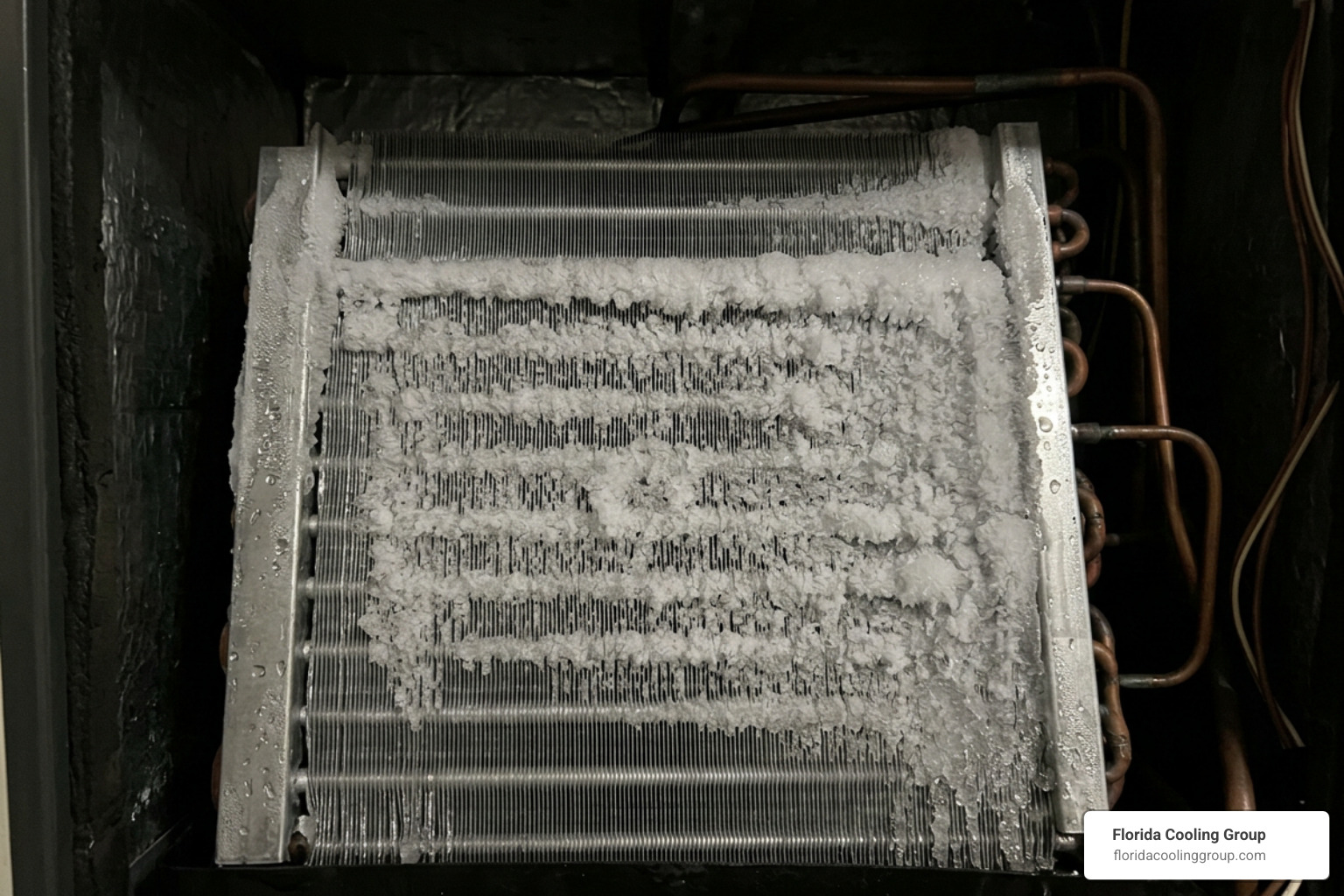
- Refrigerant Ice Accumulation: Low refrigerant pressure causes boiling points inside the coil to plunge below freezing. Moisture extracted from indoor air freezes into solid frost, leaving your inside AC unit freezing up under a thick layer of ice.
- Hissing or Bubbling Sounds: Formicary corrosion creates microscopic pinholes along copper tubing bends, producing faint hissing noises inside the indoor closet or attic space.
- Unexplained Spikes in Utility Bills: As refrigerant escapes, the compressor labors continuously without satisfying the thermostat, driving monthly electrical consumption through the roof.
- Frequent Short-Cycling: Safety pressure switches trip the outdoor compressor off and on repeatedly to prevent complete mechanical seizure under low operating pressures.
When these warning signs appear, prompt AC repair prevents minor pinhole leaks from burning out the expensive outdoor compressor motor.
Diagnostic Testing and Detecting Refrigerant Leaks
Professional diagnostic testing isolates the exact location of a leak before committing to component replacement. HVAC technicians utilize calibrated electronic sniffer tools capable of detecting trace halogen concentrations down to 0.1 ounces per year.
If electronic detection yields inconclusive results in turbulent air streams, technicians inject fluorescent ultraviolet (UV) dye into the lines or isolate the indoor coil under high-pressure dry nitrogen (up to 300–450 PSI). Diagnostic fees typically range between $100 and $250, which reputable contractors credit toward the repair if you proceed with the coil installation.
Coil Replacement vs. Full System Upgrade: How to Decide
A leaking evaporator coil does not automatically mean you need to purchase an entirely new air conditioner. However, evaluating the overall average lifespan of HVAC system components ensures you do not invest thousands into an aging machine on the verge of total breakdown.
You can compare how individual components stack up during major service decisions using this industry insights on coil replacement decisions guide.

Replacing only the indoor coil is generally recommended when:
- The air conditioner is under 8 to 10 years old.
- The outdoor condenser and scroll compressor are operating in excellent health.
- The system uses modern R-410A or R-454B refrigerant.
- The coil is still covered under the original manufacturer’s 10-year parts warranty.
Conversely, investing in a full AC replacement makes far better financial sense if the system is older than 10 to 12 years, relies on obsolete R-22 refrigerant, or has an aging outdoor unit with mismatched efficiency ratings.
Evaluating the 50% Rule and AC Coils Replacement Cost vs. New Unit Installation
HVAC professionals rely on standard financial guidelines when helping homeowners choose between major repairs and system upgrades. Knowing when to replace HVAC equipment often comes down to the 50% Rule:
- The 50% Rule: If the quote for replacing the evaporator coil exceeds 50% of the cost of a brand-new, modern system—and the current unit is past the halfway mark of its expected lifespan—opt for full replacement.
Installing a new evaporator coil onto an old, tired condenser introduces severe AHRI mismatch issues. A brand-new indoor coil paired with an inefficient 12-year-old outdoor unit reduces overall seasonal energy efficiency (SEER2), places elevated head pressure on the aging compressor, and frequently voids manufacturer warranty protections. Investing $5,000 to $12,000 in a modern, properly sized complete system provides an updated 10-year warranty, lower utility expenses, and peace of mind.
Installation Realities: Timelines, Labor, and DIY Hazards
Replacing an air conditioning evaporator coil is a complex thermodynamic procedure that takes a licensed technician between 2 to 5 hours to complete, extending up to a full day if ductwork transitions or difficult attic access are involved.
The replacement sequence requires strict adherence to technical and environmental protocols:
- Refrigerant Recovery: Safe extraction of remaining gas using an EPA-certified recovery machine.
- Disassembly and Cabinet Modification: Cutting out the corroded coil and modifying sheet metal plenums.
- Nitrogen-Purged Brazing: Connecting copper suction and liquid line sets using oxy-acetylene torches while flowing dry nitrogen internally to prevent oxidation scaling.
- Deep Vacuum Dehydration: Pulling the system down below 500 microns to remove non-condensable moisture.
- Recharging and Subcooling Calibration: Weighing in virgin refrigerant and tuning the Thermal Expansion Valve (TXV).
Attempting a DIY coil replacement carries severe legal, financial, and physical dangers. Under Section 608 of the Federal Clean Air Act, releasing fluorocarbon refrigerants into the atmosphere carries federal fines exceeding $44,000 per day per violation.
Beyond legal mandates, handling high-pressure refrigerants without proper certification risks severe frostbite skin burns, phosgene gas inhalation during torch work, and permanent compressor destruction. Investing in professional AC maintenance and certified installation ensures safety, local code compliance, and reliable cooling performance.
Frequently Asked Questions About Evaporator Coil Replacement
How long does an evaporator coil replacement take?
A standard residential evaporator coil replacement typically takes between 2 to 4 hours for an experienced, licensed HVAC technician. If the indoor air handler is situated in a restricted attic crawlspace, requires custom sheet metal fabrication, or needs extensive leak diagnostics across the line set, installation time can extend to 6 to 8 hours.
Is it worth replacing an evaporator coil on a 10-year-old AC unit?
In most scenarios, replacing an evaporator coil on a 10-year-old AC unit is not financially advisable. Systems reaching the 10-to-15-year mark have exhausted their manufacturer warranties and are at elevated risk of compressor failure. Spending $1,500 to $2,500 on a coil repair for an aging unit is often better applied toward a high-efficiency system replacement.
Can I replace an AC evaporator coil myself?
No. Homeowners cannot legally purchase regulated refrigerants or evacuate HVAC systems without an EPA Section 608 universal technician certification. DIY installations also lack the specialized brazing tools, vacuum pumps, and micron gauges required to seal lines, resulting in voided equipment warranties and potential system failure.
Conclusion
Understanding fair market pricing for evaporator coil repairs empowers you to make confident decisions for your home’s comfort and budget. Whether dealing with a minor pinhole leak on a newer unit or facing an expensive repair on an aging system, having an honest, itemized diagnostic assessment ensures you do not overpay for cooling relief.
At Florida Cooling Group, our licensed HVAC technicians deliver transparent assessments across Delray Beach, Boynton Beach, Boca Raton, West Palm Beach, Lake Worth Beach, and surrounding Palm Beach County communities. Backed by our signature FCG Guarantee, we provide upfront pricing, fast same-day response, and flexible financing options to keep your home cool all year.
To explore current pricing for all cooling services and repairs, consult our comprehensive air conditioner service cost guide or contact our team today for prompt, professional service.