Real AC Gas Refill Costs and Common Service Traps to Avoid
What an AC Gas Refill Really Costs
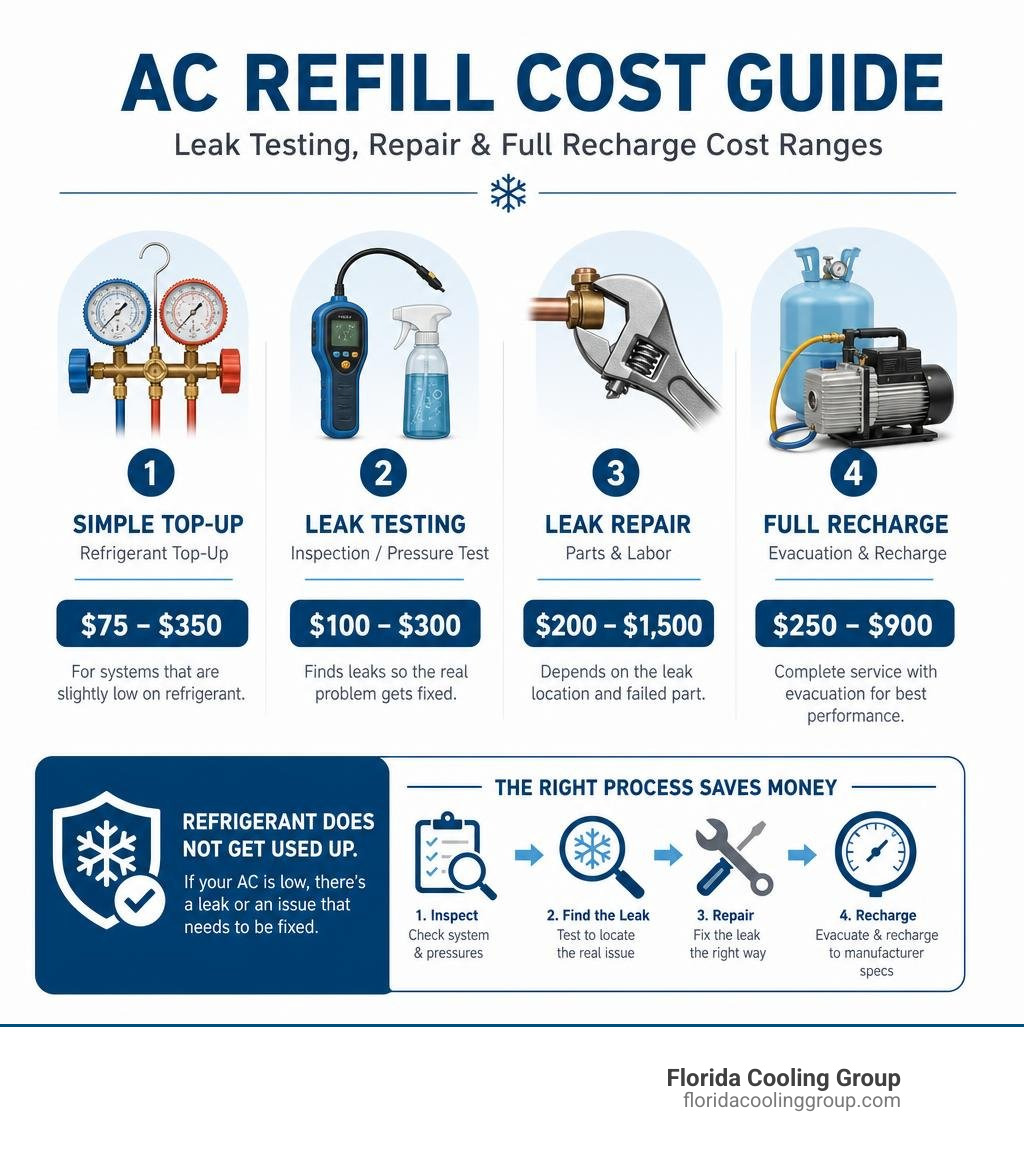
For a home central AC, a simple refrigerant top-up often costs $75 to $350, while a full professional recharge with evacuation can run about $250 to $900. If your system has a leak, expect another $100 to $300 for leak detection and roughly $200 to $1,500 for repair, depending on where the leak is and which part failed.
The most important point: AC refrigerant does not get used up. Your system is sealed. If it is low, a leak or an installation-related issue may be the real problem. Before agreeing to any refill, ask for:
- A leak inspection or pressure test.
- An itemized quote for refrigerant, labor, evacuation, and disposal.
- Confirmation of your unit’s refrigerant type, especially if it uses older R-22, which is far more costly than R-410A.
In Palm Beach County, a fast “gas top-up” may cool the house for a short time, but it can become an expensive repeat bill if the technician does not find and repair the leak first. This guide explains the real AC gas refill cost, the fees that can change the final price, and the service traps worth avoiding.
I am Charlie Hadida, CEO of Florida Cooling Group, where I help residential and commercial clients across Palm Beach and Broward Counties make clear decisions about AC gas refill cost, repairs, and maintenance. After seeing how often low refrigerant is treated as a quick-fill problem, I focus on honest diagnostics and pricing that addresses the cause before the next heat wave.
Real-World AC Gas Refill Cost Breakdown for Home and Auto
Whether you are cooling a master bedroom in West Palm Beach or commuting along I-95 in a sedan, air conditioning systems rely on the same fundamental thermodynamic principles. However, the price you pay to replenish lost refrigerant varies drastically based on system capacity, accessibility, and the regulatory environment governing residential versus automotive equipment.
Homeowners and drivers frequently encounter wildly different quotes for recharging services. To understand where your money goes, consult current industry benchmarks like the 2026 HVAC recharge cost data alongside automotive standards.
| Service Category | Typical Cost Range | Average Price | Primary Cost Drivers |
|---|---|---|---|
| Residential Top-Up (1–2 lbs) | $75 – $350 | $160 | Refrigerant type, trip fee, diagnostic time |
| Residential Full Recharge + Evacuation | $250 – $900 | $450 – $600 | System tonnage, deep vacuum labor, recovery fees |
| Residential Leak Detection | $100 – $300 | $180 | Electronic sniffing, nitrogen pressure testing, UV dye |
| Residential Leak Repair | $200 – $1,500+ | $650 | Brazing, line set patching, evaporator coil swap |
| Automotive Professional AC Recharge | $250 – $350 | $290 | R-134a vs. R-1234yf blend, machine hookup labor |
| Automotive DIY Recharge Kit | $40 – $130 | $75 | Canister size, gauge quality, sealant additives |
Residential Central AC Gas Refill Cost by Refrigerant Type
Central split systems and package units contain significantly more refrigerant than vehicle systems, typically requiring 2 to 4 pounds of refrigerant per ton of nominal cooling capacity. A standard 3-ton home unit might hold anywhere from 6 to 12 pounds of gas.
If your system only suffered a minor pressure drop from a loose service valve, a simple top-up of standard R-410A runs between $75 and $350. However, when an extensive leak drains the entire system, a technician must perform a complete recovery, fix the rupture, pull a deep vacuum, and weigh in a fresh charge. This comprehensive service typically ranges from $250 to $900, with an industry average hovering around $450 to $600.
For older units relying on R-22 (often called Freon), the material price escalates dramatically due to federal production bans. Homeowners living in older properties can reference our Local Homeowners Guide to AC Repair in 33433 to understand how neighborhood housing ages correlate with legacy R-22 systems and higher repair bills.
Car AC Gas Refill Cost and Automotive Service Averages
Automotive air conditioning systems operate in high-vibration environments, making minor seal seepage more common over 100,000 miles of driving. A professional automotive recharge typically costs between $250 and $350 at a certified service center.
This fee covers connecting dedicated recovery and recharging machines, testing system depressurization, replacing worn rubber O-ring seals, pulling a vacuum to remove atmospheric moisture, and injecting precise oil and refrigerant quantities.
Modern vehicles utilize either R-134a or the newer, environmentally conscious R-1234yf blend. Because R-1234yf systems require specialized servicing equipment and carry higher chemical raw costs, recharging a newer vehicle sits at the upper tier of automotive estimates. To see detailed automotive breakdowns, review industry automotive AC recharge and repair benchmarks.

Why Air Conditioners Lose Refrigerant and the Hidden Cost of Leaks
A functioning air conditioner is a hermetically sealed, closed-loop mechanical system. Unlike motor oil in your car or gasoline in the tank, refrigerant is neither burned nor degraded during operation. It continually cycles between liquid and gaseous states, absorbing heat from inside your home and dumping it outdoors.
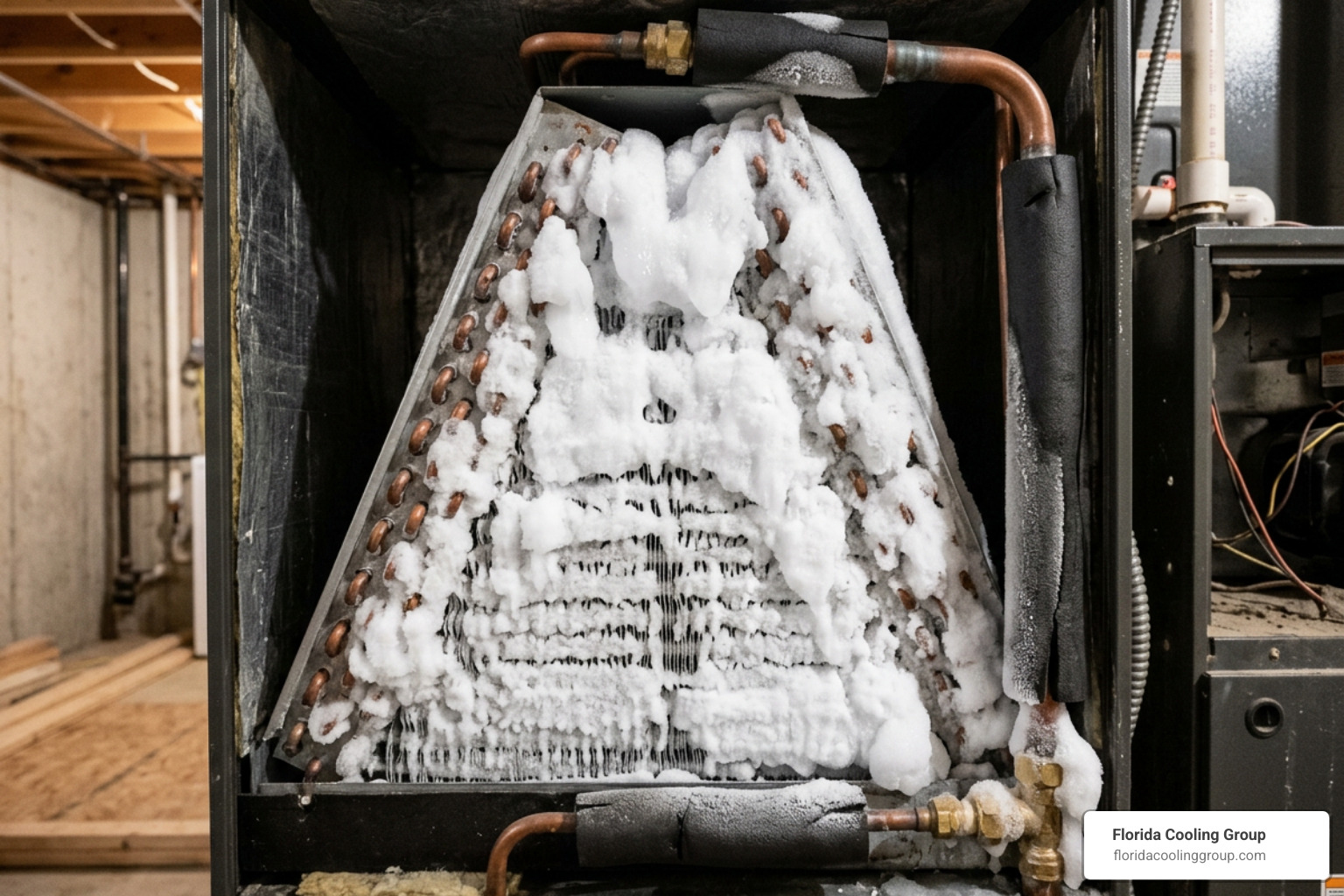
Therefore, if a technician informs you that your system is “just low on gas,” your equipment has suffered physical damage or structural degradation that must be addressed immediately.
Refrigerant escapes through microscopic pathways caused by several common issues:
- Formicary and Galvanic Corrosion: Florida’s coastal humidity, salt air, and airborne household cleaning chemicals react with copper tubing, creating pinhole leaks in the indoor evaporator coil.
- Mechanical Vibration: Constant compressor cycling can rub copper lines against aluminum cabinet framing, slowly wearing away metal walls until gas escapes.
- Thermal Stress on Joints: Repeated expansion and contraction cycles weaken soldered joints, service port Schrader valves, and mechanical flare nuts.
Diagnosing Refrigerant Leak Symptoms vs Natural System Wear
How do you know if your cooling loss is caused by low refrigerant rather than a clogged air filter or failing capacitor? If you find yourself wondering what to do when your Boynton Beach air conditioner won’t cool down, look for these classic warning signs of low refrigerant:
- Lukewarm Air from Supply Vents: The air coming from your registers feels room-temperature or slightly humid instead of crisp (which should typically be 15 to 20 degrees cooler than your home’s ambient air).
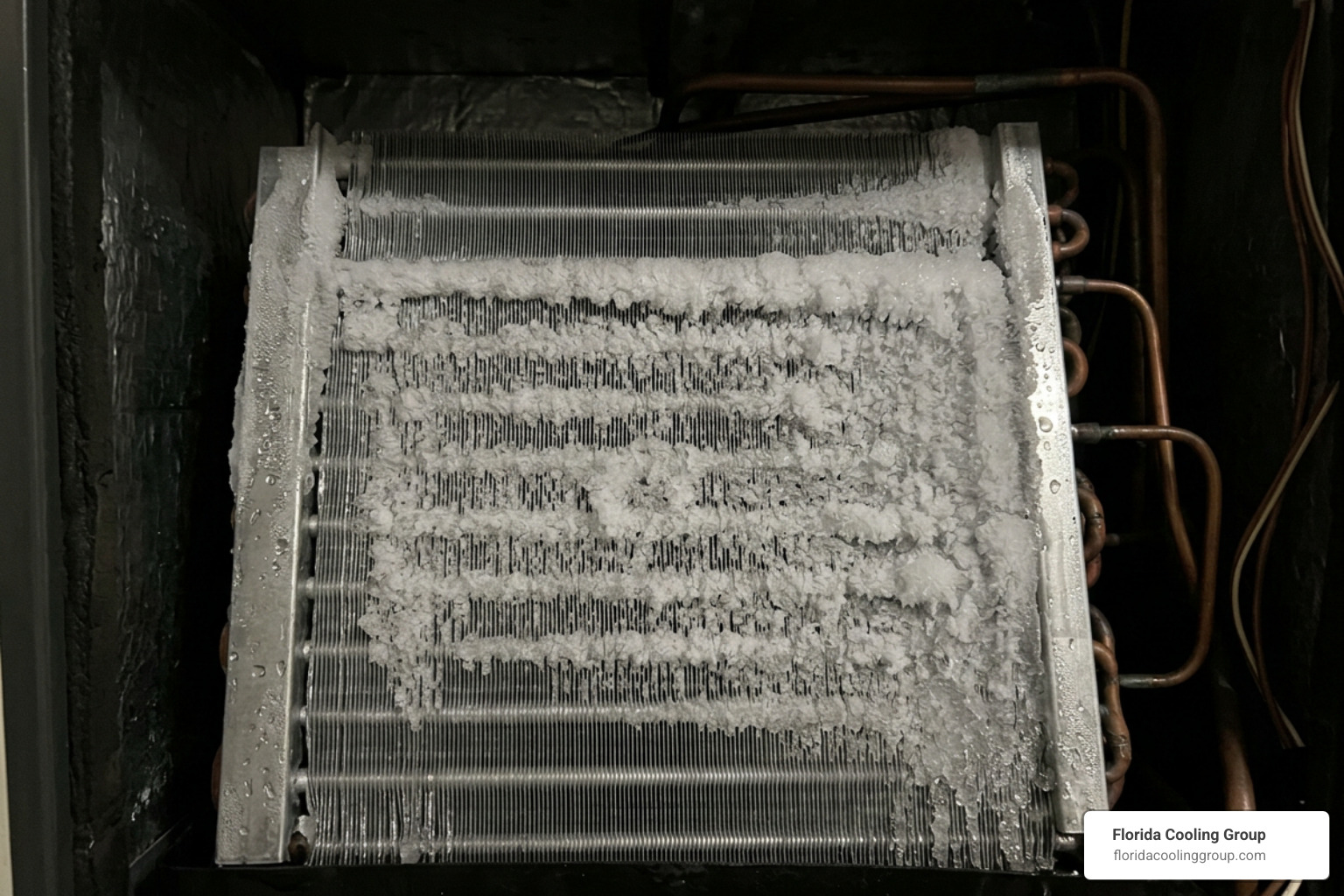
- Ice Formation on the Indoor Coil or Outdoor Line Set: As refrigerant levels drop, internal pressures drop alongside them, causing the coil’s surface temperature to fall below freezing. Moisture in the air freezes onto the coil, choking airflow.
- Audible Hissing or Bubbling Noises: A noticeable hiss near the indoor air handler or outdoor condenser often pinpoints an active pressure leak.
- Skyrocketing Electric Bills: When refrigerant drops, the system cannot satisfy the thermostat. The compressor runs continuously, consuming massive amounts of electricity without cooling your home.
Mandatory Leak Detection and Coil Repair Expenses
Refilling a leaking AC without repairing the physical breach is like putting air in a punctured tire every morning—it wastes money and rapidly damages internal components. Professional leak detection costs between $100 and $300 and utilizes three primary methods:
- Electronic Sniffer Testing: Technicians sweep sensitive electronic sensors along copper joints, coils, and service valves to locate halogen gas molecules.
- Nitrogen Pressure Isolation: The system is emptied, filled with high-pressure dry nitrogen, and monitored across isolated sections to pinpoint pressure drops.
- Ultraviolet (UV) Dye Injection: Fluorescent dye is introduced into the system; technicians then use UV lamps to spot bright glowing residue escaping from micro-cracks.
Once identified, repairing the leak costs between $200 and $1,500. Minor fixes, such as replacing Schrader valve cores or tightening flare connections, sit at the lower end ($200–$400). In contrast, patching corroded copper lines or replacing a damaged indoor evaporator coil reaches $800 to $1,500+.
To see detailed pricing examples on diagnostic labor and coil repairs, read our breakdown on air conditioning repair in Delray Beach costs and diagnostic breakdown.
Key Factors Influencing What You Pay for Refrigerant Recharging
No two HVAC repair bills look completely identical. The final price on your invoice is driven by specific technical requirements, equipment specifications, and regional labor market dynamics across South Florida communities like Boca Raton, Delray Beach, and Boynton Beach.

Refrigerant Blends: R-22 Scarcity, R-410A, and Modern Alternatives
The specific chemical running through your copper line sets dictates a substantial portion of your material expense:
- R-22 (Freon): Banned from production and importation under the EPA Clean Air Act due to its high Ozone Depletion Potential (ODP). Sourcing virgin or reclaimed R-22 costs anywhere from $50 to $80+ per pound. Recharging a fully depleted 4-ton system with R-22 can easily exceed $800 in refrigerant alone.
- R-410A (Puron): The dominant residential standard over the past two decades. With zero ozone depletion, it is mass-produced and affordable, costing between $12 and $25 per pound.
- R-32 and R-454B (Opteon XL41): As environmental regulations push for lower Global Warming Potential (GWP), modern systems installed since 2025 utilize blends like R-454B and R-32. While R-32 offers excellent thermodynamic efficiency at moderate prices, newer specialized blends like R-454B currently trade at higher introductory rates (roughly $80 per pound) due to emerging supply chains.
Labor Rates, System Evacuation, and Disposal Fees
HVAC technicians do not simply connect a tank and twist a valve. Legally compliant, high-quality refrigerant work requires specialized procedures governed by EPA Section 608 regulations:
- Standard Labor Rates: Professional HVAC diagnostic and repair labor across Palm Beach County generally ranges from $75 to $150 per hour.
- Recovery and Disposal Fees: Venting refrigerant into the atmosphere is illegal and carries federal fines up to $10,000+. Technicians must use specialized recovery machines and certified DOT cylinders to capture old or contaminated gas, which adds $50 to $150 in equipment and disposal charges.
- Deep Vacuum Dehydration: If a system has had an active leak, atmospheric moisture and non-condensable air have entered the line set. Technicians must hook up a two-stage vacuum pump to pull the system down below 500 microns. This triple-evacuation process takes 45 to 90 minutes of dedicated labor, ensuring moisture is boiled out so it cannot form corrosive acids inside the compressor.
DIY AC Recharge vs Professional Service: Risks and Hidden Traps
Automotive parts stores sell off-the-shelf recharge cans equipped with basic push-button gauges, tempting homeowners and drivers into DIY repairs. While adding a $40 can of R-134a to an older car might provide temporary relief, attempting DIY refrigerant work on residential systems or misjudging automotive pressures introduces severe financial and mechanical hazards.
The Dangers of Overcharging and Compressor Damage
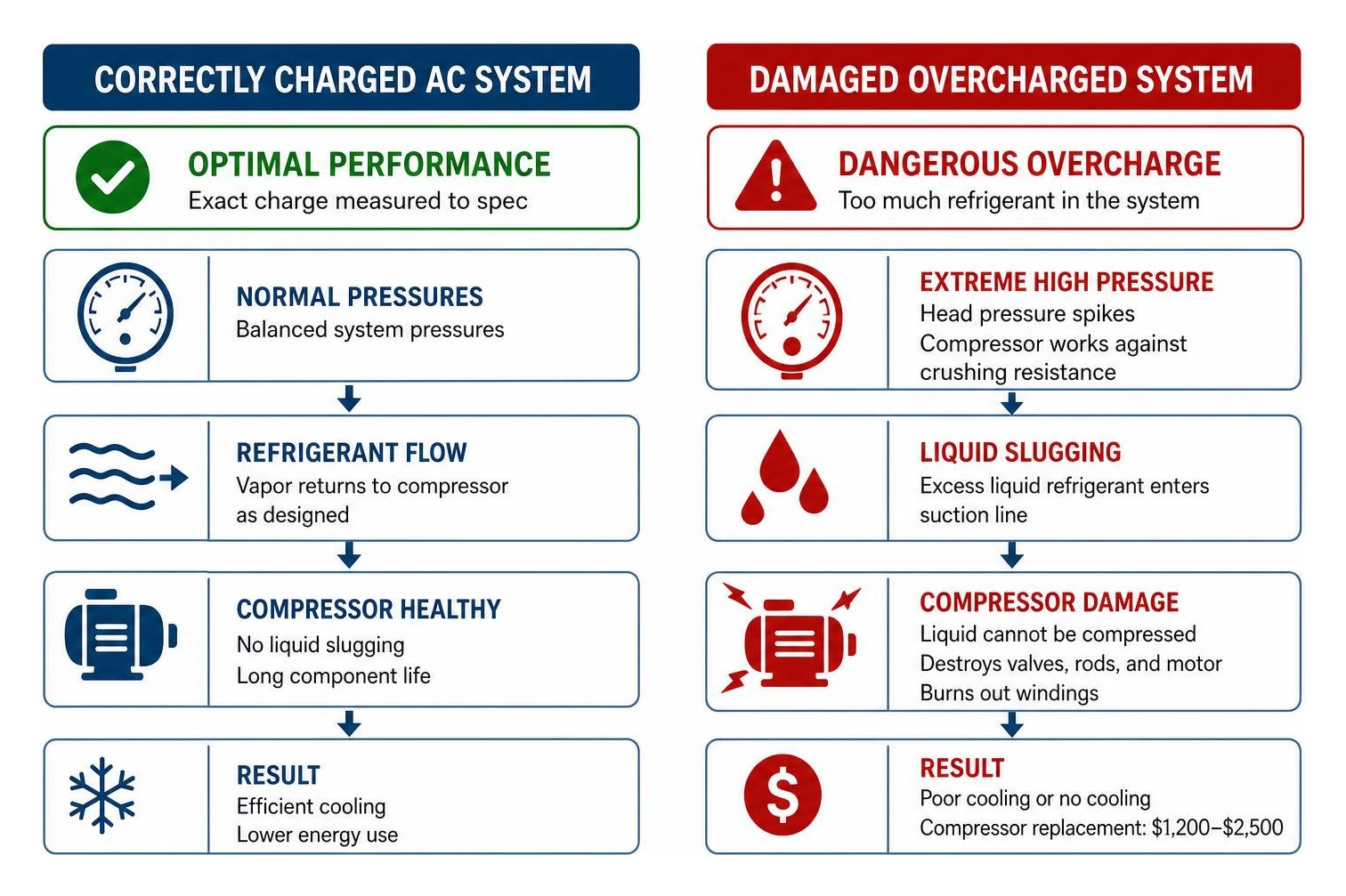
More refrigerant does not equal more cooling. In fact, air conditioners require an exact charge measured down to the ounce. An overcharged system creates extreme head pressure, forcing the compressor to work against crushing resistance.
When excess liquid refrigerant enters the suction line, it causes “liquid slugging.” Compressors are engineered strictly to pump vapor; because liquids cannot be compressed, liquid refrigerant entering the cylinder physically destroys internal valves, breaks connecting rods, and burns out the motor windings. Replacing a destroyed compressor costs between $1,200 and $2,500—turning a cheap DIY attempt into a catastrophic expense.
Professional technicians do not guess charge levels using single ambient gauges. We use digital manifold sets, pipe clamps, and psychrometers to calculate exact superheat (for fixed-orifice piston systems) and subcooling (for thermal expansion valve/TXV systems) targets specified on the manufacturer data plate.
Avoiding Bait-and-Switch Top-Up Scams
Unfortunately, the HVAC industry is not immune to deceptive sales tactics. Unscrupulous contractors often advertise “$49 AC Tune-Ups” as loss leaders, only to arrive at your home and claim your unit is critically low on gas.
Common red flags include:
- Unmetered Charging: Technicians who fill refrigerant “by feel” or by watching a generic needle without using digital scales or checking subcooling calculations.
- “Quick Top-Off” Offers Without Leak Checks: Adding gas without offering leak detection guarantees the gas will escape again within weeks or months.
- Magic Leak-Stop Additives: Injecting liquid chemical sealants into residential systems to plug leaks. These chemical sealants frequently react with trace moisture, forming solid gums that permanently restrict metering devices and destroy TXV valves.
- Vague, Lump-Sum Invoicing: Quotes that list a flat $500 fee without separating pounds of refrigerant, hourly labor, or diagnostic testing.
When summer temperatures spike in communities like Wellington, Royal Palm Beach, or Lantana, fast service is essential, but proper diagnostics should never be sacrificed for speed. Review our top strategies for getting fast air conditioner service in Wellington when heat strikes to ensure you receive rapid, verified service from certified professionals.
Frequently Asked Questions About AC Refrigerant Recharging
How often should an air conditioner need a gas refill?
In a properly installed, undamaged HVAC system, an air conditioner should never need a gas refill. Because the refrigerant loop is completely sealed, the initial factory charge circulates continuously for the entire 12- to 15-year operational lifespan of the unit.
If you are adding refrigerant every spring or summer, your system has an active mechanical leak that requires professional location and repair.
Can I legally recharge my home AC system myself?
No. Under Section 608 of the United States Clean Air Act, it is a federal violation for uncertified individuals to purchase bulk refrigerants or service stationary residential HVAC equipment.
Handling, recovering, and charging residential refrigerants requires EPA Universal or Type II certification, along with registered recovery cylinders and vacuum equipment. Violations can carry fines exceeding $10,000.
Is it better to refill refrigerant or replace an older AC unit?
To decide whether to repair or replace, follow the standard HVAC $5,000 Rule: Multiply the age of your air conditioning unit (in years) by the total quoted repair cost (including leak repair and refrigerant recharge). If the resulting number exceeds $5,000, replacing the system is typically the smarter financial move.
For instance, if your 12-year-old system needs a $700 R-22 recharge and leak repair ($12 \times 700 = $8,400$), that money is better invested in a modern, energy-efficient SEER2 replacement that lowers monthly FPL electric bills and comes with a 10-year parts warranty.
Conclusion
Understanding the realistic costs of recharging an air conditioner helps you avoid costly scams and protects your home’s most critical cooling equipment. Never settle for temporary gas top-offs that fail to address underlying structural leaks. By demanding comprehensive electronic leak detection, verifying refrigerant types, and insisting on itemized quotes, you ensure your investment delivers reliable, long-term indoor comfort.
At Florida Cooling Group, our team provides transparent, certified HVAC repairs across Palm Beach County—including Delray Beach, Boynton Beach, Boca Raton, Lake Worth Beach, and West Palm Beach. Backed by our customer-focused FCG Guarantee, we offer honest upfront pricing, fast same-day response, and flexible financing options so your home stays cool without unexpected budget surprises.
For a comprehensive breakdown of all typical cooling system maintenance, inspection, and repair rates, explore our comprehensive guide on how much air conditioner service costs and schedule your professional diagnostic assessment today.