Landlord Guide to AC Duct Replacement and Tax Deductions
AC Duct Replacement for Rentals: Protect Comfort, Costs, and Compliance
For AC duct replacement for rentals, start with a licensed HVAC inspection to confirm whether the ducts are leaking, crushed, mold-damaged, poorly sized, or simply near the end of their useful life. Landlords should generally handle replacement of failing ductwork because it is part of the property’s HVAC system and can affect habitability, while tenants should promptly report comfort issues and complete routine tasks such as changing filters when their lease requires it.
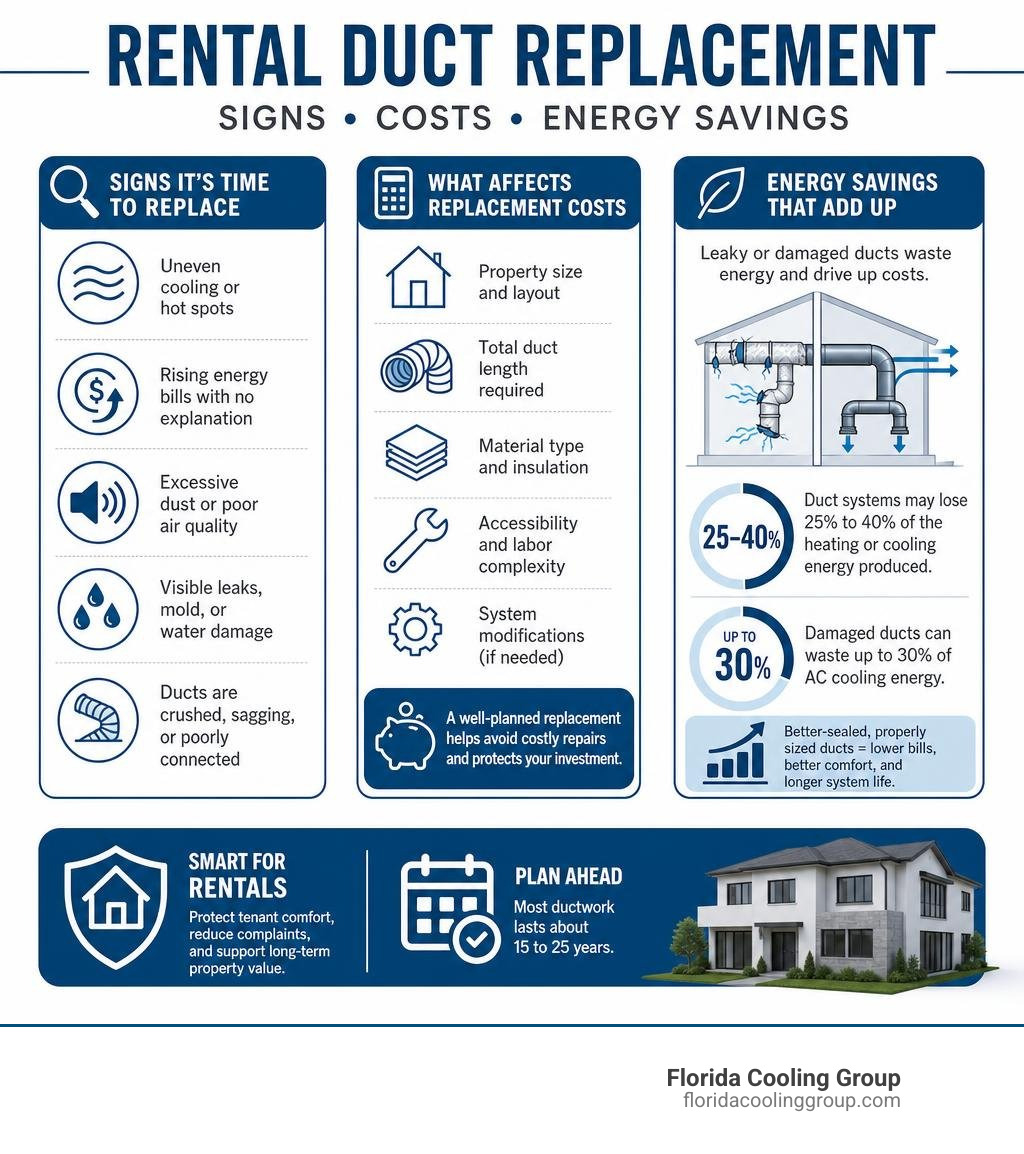
Replacing worn ducts can be a smart preventive expense. Duct systems may lose 25% to 40% of the heating or cooling energy produced, and damaged ducts can waste up to 30% of AC cooling energy. That means better-sealed, properly sized ducts can lower operating costs, reduce hot and cold room complaints, and help protect the HVAC equipment from excess strain.
Most ductwork lasts about 15 to 25 years. In South Florida’s humid climate, material choice, insulation, moisture control, and installation quality matter just as much as age. This guide explains replacement costs, landlord responsibilities, scheduling, material options, and the tax treatment questions to discuss with a qualified tax professional.
I am Charlie Hadida, CEO of Florida Cooling Group, serving residential and commercial HVAC clients in Palm Beach and Broward Counties. Our experience with AC duct replacement for rentals includes helping property owners address airflow, efficiency, comfort, and long-term system reliability without guesswork.
Cost Factors and ROI for AC Duct Replacement for Rentals
When managing investment real estate, understanding the complete scope of your HVAC ductwork replacement cost is critical for balancing cash flow against long-term capital maintenance. Replacing ductwork is rarely a one-size-fits-all expense. Total project costs hinge on the overall square footage of the rental unit, total linear footage of ducting required, material selections, and physical accessibility.
Nationally, standard ductwork installation costs an average of $1,252, with most property owners paying between $453 and $2,189. On a per-foot basis, installing or replacing ductwork generally ranges from $10 to $40 per linear foot for combined materials and labor.
Because duct installation requires navigating tight, unconditioned spaces, cutting drywall, and ensuring airtight connections, labor accounts for roughly 60% of the total project invoice. In Florida markets, professional HVAC hourly rates typically range from $50 to $110 per technician. Investing in quality installation delivers immediate returns: properly designed and sealed ductwork can boost overall HVAC efficiency by 20% to 30%, which takes immense strain off expensive cooling equipment.
Average Ductwork Replacement Costs by Location and Size
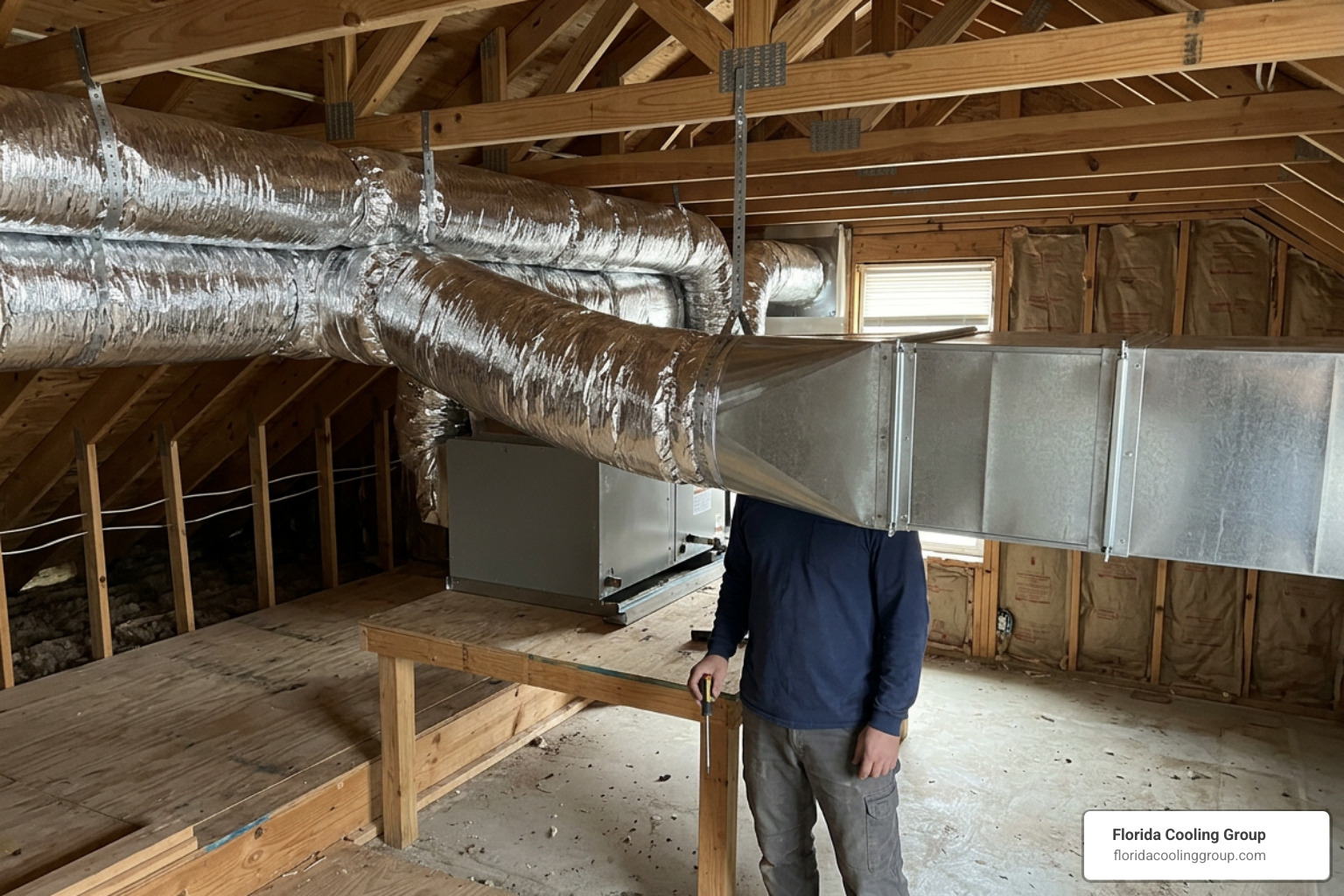
Duct accessibility dictates a substantial portion of the labor required for the job. In Florida single-family rentals, ducts are most commonly routed through hot attics, while older multifamily properties or homes on raised foundations may place them in crawl spaces, drop ceilings, or interior wall chases.
Crawl spaces often present the most challenging working conditions, requiring specialized maneuvering that elevates overall labor costs. Conversely, wide-open attics or exposed ceiling layouts streamline the replacement process. The table below outlines typical project costs across common installation locations and materials:
| Duct Location / Material Type | Average Cost Range (Materials + Labor) | Labor Difficulty Factor | Primary Climate & Rental Considerations |
|---|---|---|---|
| Attic Installation (Flexible Insulated) | $1,200 – $2,800 | Moderate | Standard for single-family rentals; requires high R-value insulation to prevent condensation. |
| Crawl Space Installation | $1,800 – $3,500 | High | Requires moisture barrier protection and pest-resistant outer jacketing. |
| Wall Chases & Drop Ceilings | $1,500 – $3,200 | Moderate to High | Involves selective drywall removal, framing alterations, and patching. |
| Galvanized Sheet Metal (Trunk Lines) | $7 – $13 per linear foot | Moderate | Best long-term durability; highly resistant to mold growth and pest damage. |
| Flexible Ductwork (Insulated) | $2 – $6 per linear foot | Low to Moderate | Cost-effective and fast to install; must be properly tensioned to avoid airflow restriction. |
For a standard Florida home ranging from 1,000 to 2,000 square feet, a complete replacement usually requires between 100 and 250 linear feet of ductwork. In Central and South Florida regions, total costs average approximately $1,593, generally falling within a localized range of $813 to $2,764 depending on architectural complexity.
Tax Deductions and Capital Improvements for Landlords
Managing HVAC upgrades strategically involves understanding how the IRS views repairs versus capital improvements. Landlords must classify these expenses accurately to maximize annual write-offs and manage their depreciation schedules effectively. For detailed context on broader equipment life cycles, review our guide on Air Conditioner Replacement Cost for Rental Properties.
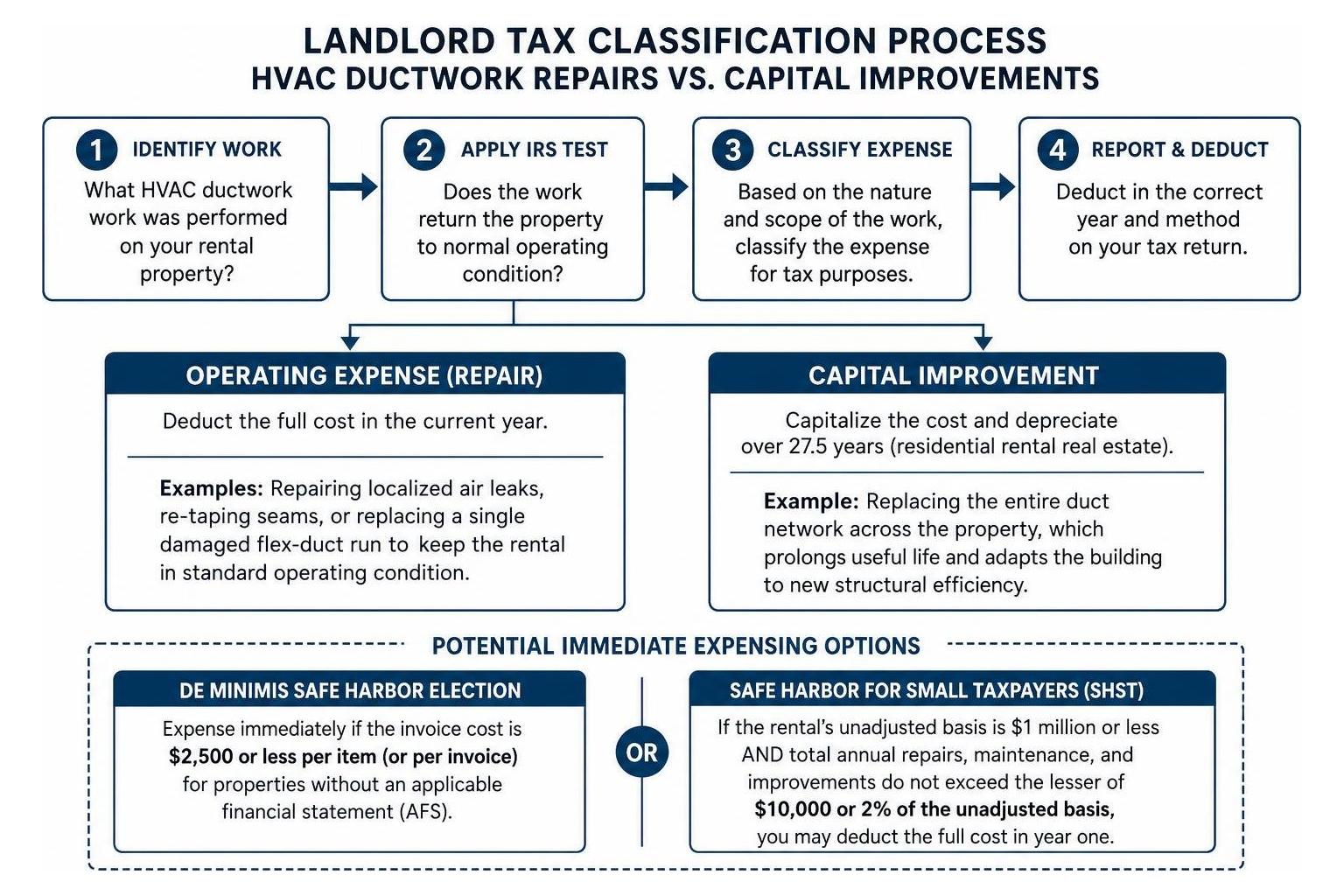
Under standard IRS guidelines:
- Operating Expense (Repair): If you are repairing localized air leaks, re-taping seams, or replacing a single damaged flex-duct run to keep the rental property in standard operating condition, you can generally deduct the full cost as a current-year operating expense.
- Capital Improvement (Depreciation): Replacing the entire duct network across the property is considered an improvement that prolongs the building’s useful life and adapts it to new structural efficiency. Full replacements are typically capitalized and depreciated over a 27.5-year schedule for residential rental real estate.
- De Minimis Safe Harbor Election: Under the IRS De Minimis Safe Harbor, landlords can often expense tangible property improvements immediately if the invoice cost falls under $2,500 per item (or per invoice) for properties without an applicable financial statement (AFS).
- Safe Harbor for Small Taxpayers (SHST): If your rental property has an unadjusted basis of $1 million or less, and your total annual repairs, maintenance, and improvements do not exceed the lesser of $10,000 or 2% of the unadjusted basis, you may qualify to deduct the full replacement cost in year one.
Disclaimer: Real estate tax laws are intricate. Always consult a certified public accountant (CPA) or tax professional to apply these tax rules to your specific portfolio.
Signs Rental Ducts Need Replacement vs. Tenant Responsibilities
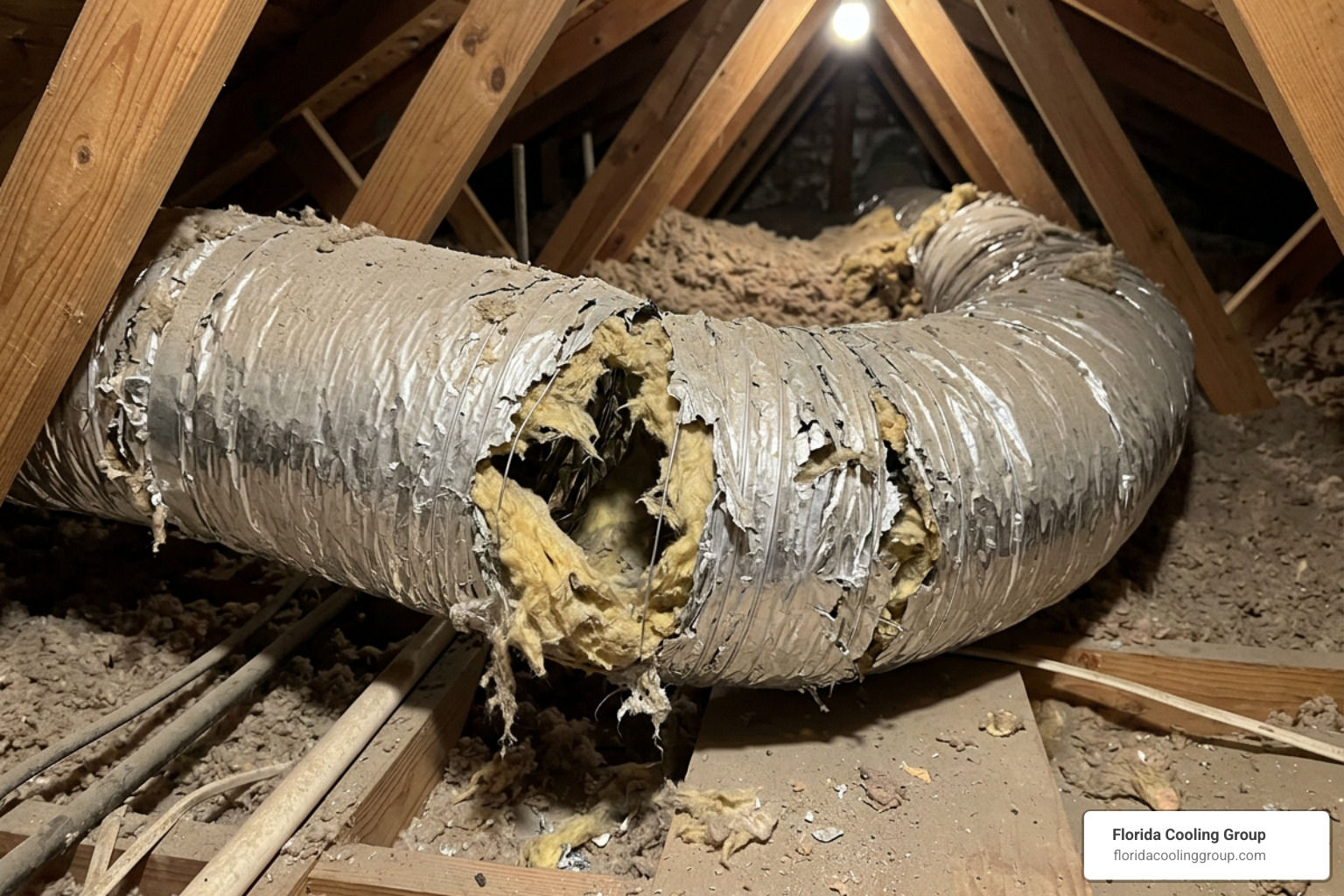
Rental properties experience diverse occupant habits, making early problem detection crucial for asset longevity. When ducts fail, tenants often assume the cooling unit itself is broken. A systematic inspection can differentiate between ductwork deterioration and equipment failure.
Critical Warning Signs for AC Duct Replacement for Rentals
If your tenants continuously complain of poor cooling, look for these key indicators of failing duct systems:
- Chronic Hot and Cold Spots: Certain bedrooms or living zones remain stuffy while others are freezing, signaling disconnected runs or collapsed inner liners.
- Persistent High Humidity and Musty Odors: When return ducts pull hot, humid attic air through tears, indoor humidity climbs, encouraging mold growth near ceiling registers.
- Excessive Dust and Escalating Allergies: Punctured ductwork pulls attic insulation, fiberglass particulates, and dust directly into living spaces.
- Sudden Utility Spikes: Tenants faced with an air conditioner not cooling will lower the thermostat setting, forcing the compressor into non-stop operation and driving up electric bills.
- Visible Duct Deterioration: If flexible ducts have turned brittle, outer plastic jackets are unraveling, or metal boots show heavy rust, the system is past its prime. Recognizing these and other common signs your AC needs repair helps prevent sudden system failure.
Landlord vs. Tenant Legal and Lease Obligations
Under Florida landlord-tenant statutes and the implied warranty of habitability, building owners are legally obligated to maintain essential structural components, plumbing, and heating/cooling systems in safe, functional condition. Because ductwork is a permanent structural fixture hidden behind walls, floors, and ceilings, major replacements and structural repairs rest solely on the landlord.
Tenants, on the other hand, are responsible for baseline upkeep outlined in their lease:
- Replacing air filters every 30 to 90 days to maintain correct airflow.
- Keeping floor and ceiling registers unobstructed by furniture, drapes, or rugs.
- Reporting unusual moisture, foul odors, or airflow drops promptly.
When duct systems are structurally sound but filled with accumulated pet dander or dust from prior occupancies, landlords often benefit from scheduled cleaning air conditioning ducts between lease cycles to reset baseline indoor air quality.
Choosing Duct Materials and Timing the Replacement
Selecting the appropriate material directly influences maintenance overhead and asset resilience. In Florida’s high-humidity climate, materials must withstand ambient moisture while delivering efficient airflow.
Best Duct Materials for Durability and Humidity Resistance
- Galvanized Sheet Metal: The gold standard for rental durability. Rigid sheet metal trunk lines resist rodent intrusion, will not collapse under heavy static pressure, and offer smooth inner surfaces that discourage microbial growth. While initial material costs range from $7 to $13 per linear foot, sheet metal lasts 30 to 50 years with minimal maintenance.
- Insulated Flexible Ductwork: Featuring a spring steel wire helix enclosed in a multi-ply polymer jacket and wrapped in fiberglass insulation, flexible ductwork is cost-effective ($2 to $6 per linear foot) and fast to route around structural framing. For South Florida rentals, always specify R-6 or R-8 insulation with a continuous vapor barrier to prevent outer condensation.
- Fiberglass Duct Board: Rigid boards formed from compressed resin-bonded glass fibers provide built-in thermal insulation and sound dampening. However, if exposed to sustained high humidity or water leaks, duct board can absorb moisture, making proper sealed installation vital for indoor air quality improvement.
Scheduling AC Duct Replacement for Rentals: Turnover vs. Occupied
The optimal window for replacing ductwork is during tenant turnover. A vacant property provides HVAC crews unrestricted access to attics, closets, and living areas without disturbing tenant schedules, moving personal belongings, or creating safety concerns. Furthermore, working in an empty unit eliminates the risk of rent concessions or habitability claims if cooling must be disconnected for several hours.
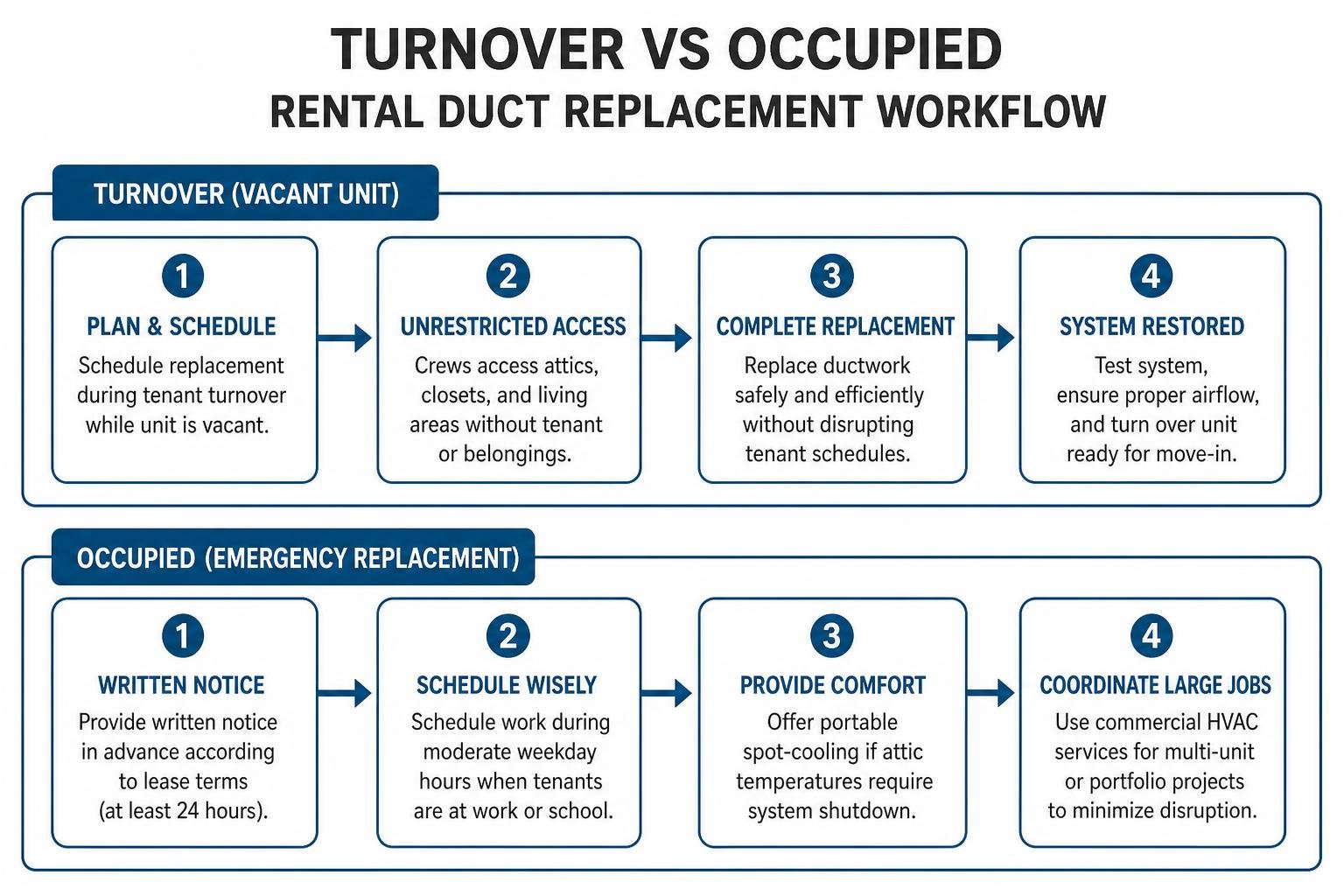
When an emergency replacement occurs during an active tenancy:
- Provide written notice well in advance according to local lease terms (at least 24 hours).
- Schedule work during moderate weekday hours when tenants are typically at work or school.
- Offer portable spot-cooling units if attic temperatures necessitate shutting off the central system for extended periods.
- For multi-unit complexes or portfolios requiring comprehensive work, utilize dedicated commercial HVAC services to ensure rapid, multi-crew deployment that minimizes disruption.
Consequences of Delay and Improper Duct Installation
Ignoring deteriorated ductwork or hiring an unlicensed handyman to cut corners on installation triggers expensive cascading problems. Duct systems must be calculated and balanced accurately; as detailed in our guide on Why AC Replacement Is More Complicated Than It Looks, improper installation damages connected equipment and degrades building envelopes.
Energy Efficiency Losses and Premature HVAC Wear
Duct systems in disrepair lose 25% to 40% of the cooling energy generated by the air handler. Leaks in the supply side pump chilled air into uninhabited attics, while return-side leaks pull 130°F unconditioned attic air into the evaporator coil.
This mismatch causes severe static pressure imbalances:
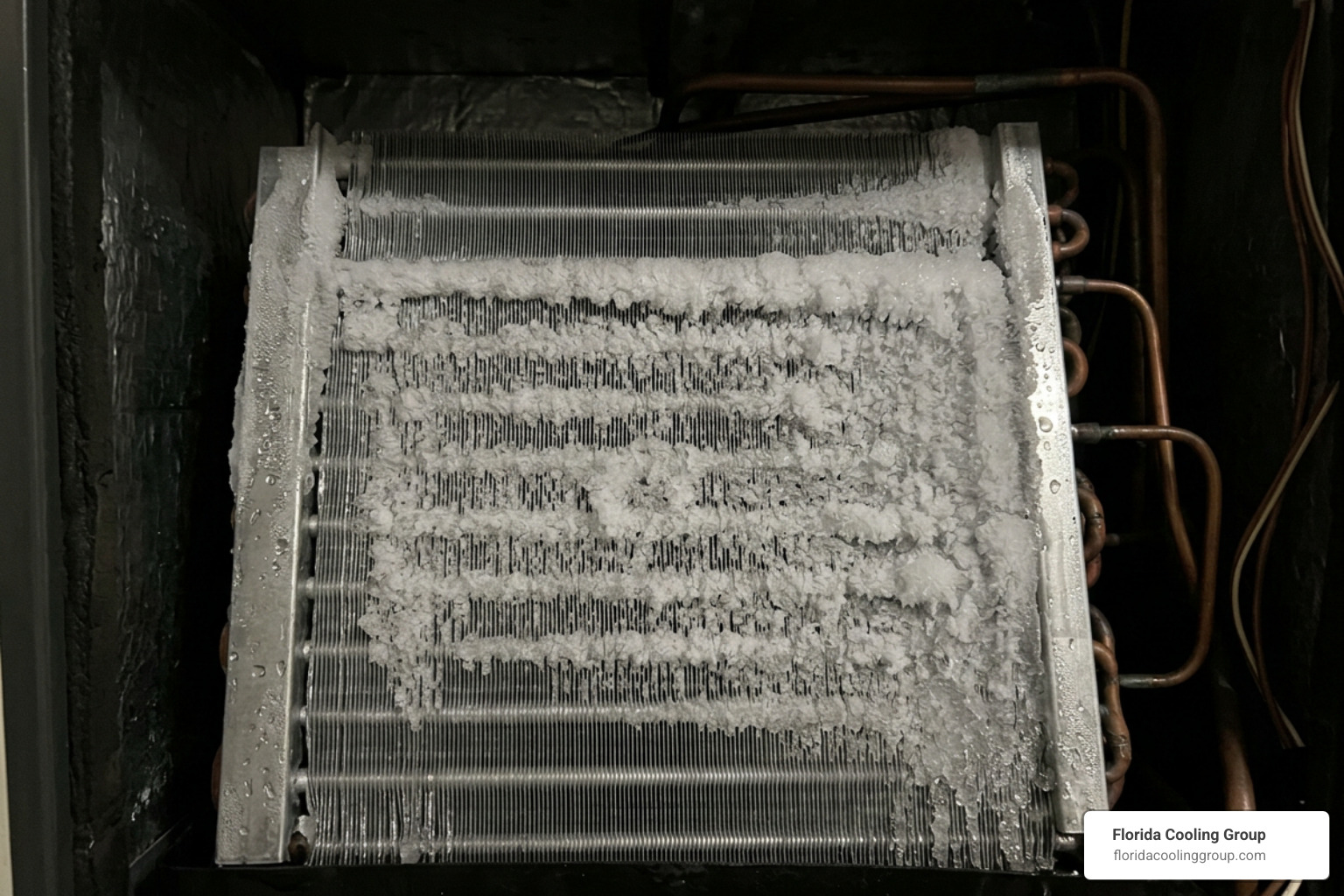
- Restricted Airflow: Undersized, sagging, or crushed flex ducts choke airflow, causing the evaporator coil to freeze over into a solid block of ice.
- Short-Cycling: Incorrect static pressure tricks the system into frequent starts and stops, stressing electrical relays, capacitors, and blower motors.
- Compressor Burnout: Constantly running against high resistance overheats the compressor, shortening a 15-year unit’s lifespan down to 5 to 7 years. Understanding these mechanical relationships clarifies when to replace HVAC equipment alongside your ductwork.
Impact on Tenant Retention and Rental Property Value
Uncomfortable tenants do not renew leases. When a rental property struggles with chronic stuffiness, uneven cooling, or $350 monthly electric bills, residents look for new housing at lease end. Tenant turnover costs—including cleaning, re-listing, tenant screening, and lost rent during vacancy—often exceed $3,000 to $5,000 per occurrence.
Investing in professional, code-compliant ductwork installation preserves structural equity. Verified, sealed ducting prevents attic moisture from rotting roof trusses and ceiling drywall, ensures compliance with building codes, and enhances property valuation during refinancing or appraisal inspections.
Frequently Asked Questions About Rental Duct Replacement
How long does ductwork typically last in a rental property?
Most standard residential ductwork lasts between 15 and 25 years. Flexible ductwork subjected to extreme attic heat and humidity tends to deteriorate closer to the 15-year mark, while well-maintained galvanized sheet metal duct systems can last 30 to 50 years.
Who is legally responsible for duct replacement in a leased home?
The landlord is legally responsible for duct replacement. Under residential leasing laws and building habitability codes, ductwork is classified as a permanent structural building system. Unless damage is caused by intentional tenant negligence, structural HVAC maintenance and replacements fall under the property owner’s purview.
Does replacing ductwork lower tenant utility bills?
Yes. Quality, properly sized, and fully sealed ductwork can improve HVAC system efficiency by 20% to 30%. Eliminating air leaks prevents conditioned air from escaping into attics or crawl spaces, directly lowering the kilowatt-hour usage needed to cool the rental.
Conclusion
Proactive maintenance of your rental property’s air distribution system protects both your financial returns and your physical real estate. Outdated, leaking ducts waste energy, wear out expensive cooling machinery prematurely, and degrade tenant satisfaction.
At Florida Cooling Group, we back our residential and commercial HVAC services with our trusted “FCG Guarantee,” delivering transparent pricing, same-day response options, and flexible financing across Palm Beach County. To review your investment property’s ducting layout and receive an accurate HVAC Ductwork Replacement Cost assessment, contact our certified HVAC specialists today.